


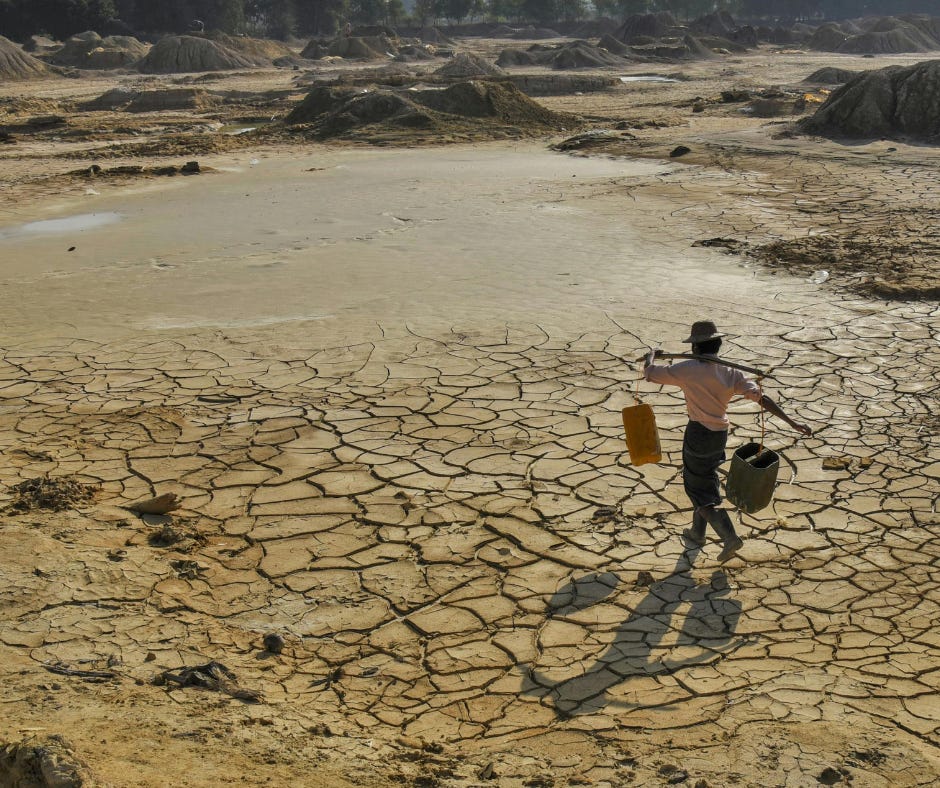
In 2024, Asia and the Pacific recorded a staggering 24 million disaster-related displacements—accounting for over half of the global total. This figure, highlighted during the March 2026 International Organization for Migration (IOM) dialogue, is often framed by states as a logistical nightmare or a failure of border security. However, viewing these millions through the lens of cold statistics conceals a deeper, more corrosive crisis of human dignity. When migration is treated merely as a panicked flight from rising tides or scorched earth, the agency of the individual is erased.
While international bodies like the IOM provide the necessary high-level platforms for cooperation, they often operate in a vacuum of abstraction. The true “reality check” resides within the region’s (Civil Society Organization) CSOs, which are actively reclaiming the narrative of climate mobility. By grounding policy in frontline experience and indigenous customary systems, these organizations argue that migration should not be a desperate last resort of the vulnerable, but a proactive, dignified strategy for adaptation. Ultimately, the path to regional resilience lies in moving away from top-down management toward a framework in which the right to move—and the right to stay—are defined by the communities themselves.
The temporal gap
The climate crisis in Asia and the Pacific is not a single event but a spectrum of hazards that demands a sophisticated, dual-track response. On one end are sudden-onset disasters—the flash floods, heatwaves, and droughts that triggered over 24 million displacements in a single year. These are the headline-grabbing shocks that typically command state attention. On the other end, however, lies the more insidious threat of slow-onset processes: the creeping sea-level rise, shifting rainfall patterns, and gradual environmental degradation that erode the very foundation of habitability.
The structural tension within the region arises from a fundamental mismatch between political “short-termism” and cumulative reality. Government disaster responses are largely reactive, designed to manage the immediate logistics of temporary evacuation and emergency aid. Yet, for millions in the Pacific and Southeast Asia, climate mobility is a long-term, cumulative process in which the point of “no return” is reached well before a storm hits. When policy remains fragmented—focusing only on the next monsoon or fiscal cycle—it fails to address the permanent loss of ancestral lands and the total restructuring of local economies.
This creates a profound “top-down” disconnect. International frameworks and national mandates often prioritize bureaucratic efficiency over the indigenous customary systems that have governed mobility and land use in the Pacific for centuries. In nations like Fiji, these traditional systems are not merely cultural artifacts; they are the primary mechanisms through which communities negotiate risk and define belonging. When regional policies overlook these local realities, they inadvertently strip agency from the displaced. The analytical problem, therefore, is not a lack of data but a lack of integration. By ignoring frontline insights from civil society, top-down strategies risk treating climate migrants as passive victims of a “natural” disaster rather than active participants in political and social transformation. The stakes are clear: without aligning formal policy with indigenous resilience, the region’s response to migration will remain as dangerous as the coastlines it seeks to protect.
Practice-based resilience
The intellectual heart of the climate mobility debate is not found in the displacement statistics, but in the concept of “Dignified Livelihoods.” For too long, regional policy has viewed migration as a binary: a person either stays and suffers or leaves and survives. CSOs are dismantling this reductionist view by arguing that true dignity is rooted in choice. If a community is forced to move because of a total collapse of local opportunity, that is not “adaptation”—it is a failure of the state.
A primary example of this is seen in the work of Mars Ashir, Project Coordinator at the National Workers Welfare Trust in India’s Narayanpet district. By securing 125 days of guaranteed rural work annually, local initiatives have transformed the “Right to Stay” from a theoretical hope into an economic reality. This is a critical intervention against urban vulnerability. When rural workers are not forced to migrate to cities to work in often exploitative informal economies, they retain their social capital and community ties. Dignity, in this context, is the financial and structural power to resist unwanted displacement.
Simultaneously, for those who must or choose to move, the narrative is being rewritten through digital sovereignty. In Vietnam, Khanh-Linh Ta’s “Green Path Migrants” project demonstrates that the modern climate migrant is not a silent victim, but a digitally connected agent. With over 80% of its engagement coming from youth aged 18–34 and a significant majority of users being women, this platform uses “youth-focused language” to navigate the complexities of mobility. This digital shift allows vulnerable groups to share practical solutions and peer-to-peer insights, effectively bypassing top-down information systems that often fail to reach those most affected by shifting rainfall or saline intrusion.
The reasoning for this shift is that CSOs provide the “practice-based knowledge” that high-level frameworks lack. International agencies can model sea-level rise, but they cannot model how a mother in a rural household negotiates the risk of a drought against the risk of sending her child to an unfamiliar city. They cannot map the “informal and collective action” that sustains a community when a storm passes. Because CSOs operate at the household level, they understand that mobility decisions are deeply gendered and generational. By centering the experiences of women and youth, these organizations ensure that “resilience” is not just a buzzword in a synthesis brief, but a lived reality that prioritizes the dignity of the person over the efficiency of the policy. In the end, a dignified move is one made with a clear map, a full stomach, and a protected identity.
The limits of localism
While the argument for grassroots agency is compelling, it must be tempered by the sheer magnitude of the coming crisis. By 2050, the Internal Displacement Monitoring Centre and Asian Development Bank project that up to 48.4 million people in East Asia and the Pacific could be forced to move. Critics of the decentralized approach correctly ask: Can a network of relatively small CSOs truly manage a human migration of this scale? The necessity of state-led intervention and massive top-down infrastructure—ranging from planned city expansions to international visa frameworks—cannot be ignored. Local resilience projects like those in India or Vietnam are vital, but they cannot build the cross-border legal protections or the multi-billion-dollar sea defenses required to protect tens of millions.
Furthermore, intellectual honesty requires us to acknowledge the inherent limits of “localism” and indigenous customary systems. While these systems provide deep cultural continuity, they often lack the sustainable resources and formal legal standing in international law to protect migrants once they cross a sovereign boundary. A traditional land-tenure system in Fiji, for instance, offers little protection to a family that has relocated to an urban center in Australia or New Zealand. Without a high-level policy bridge, the “dignity” of local systems risks being lost in the friction of international bureaucracy.
Finally, we must confront the internal complexities within these communities—specifically the persistent gender gap. As Mars Ashir noted, migration decisions are still largely dictated by male household members, often sidelining the needs and voices of women and youth. If CSOs are to be the true “reality check” for regional policy, they must also act as internal disruptors of the patriarchal structures that silence vulnerable members within their own ranks. The challenge, therefore, is not to choose between top-down and bottom-up, but to create a symbiotic governance model where the state provides the massive structural “canopy” under which local, dignified, and inclusive agency can actually flourish.
The legislative litmus test
As the March 2026 IOM dialogue concludes, all eyes turn toward the forthcoming synthesis brief—a document that must be more than a record of shared grievances. For this dialogue to transcend mere rhetoric, its “Common Principles” must undergo a rigorous transition from high-level advocacy into the hard reality of national budgets and international law. Analysts and citizens alike should watch closely: will the proactive strategies be codified into state-funded resilience planning, or will they remain marginalized as “best practices” while top-down infrastructure continues to dominate the fiscal landscape?
The true test of regional cohesion lies in whether governments can move past reactive disaster management toward a framework of Climate Sovereignty. This requires a fundamental shift in how we define success in the face of environmental collapse. In an era where 48 million lives hang in the balance, we must confront a final, existential provocation: does the future of the Pacific and Southeast Asia depend on the height of the sea walls we build, or on the strength of the legal and social protections we afford to those forced to move beyond them? The answer will define the dignity of the region for generations to come.
This article reflects reporting and analysis made by The Southeast Asia Pacific Frontier. If you have additional context, a different take, or a perspective we’ve missed — whether you’re a researcher, a policy practitioner, or someone living with these realities on the ground — this is an evolving story and we’d like to hear from you. Drop a comment below or get in touch.
About Cyril Karl Carandan
Cyril Karl Carandan is a dedicated humanitarian worker with a bachelor’s degree in Diplomacy and International Affairs from De La Salle-College of Saint Benilde. He formerly served as the Secretary-General of the 1st Benilde Model ASEAN Meeting. Cyril specializes in MEAL frameworks, research, and ASEAN.
