


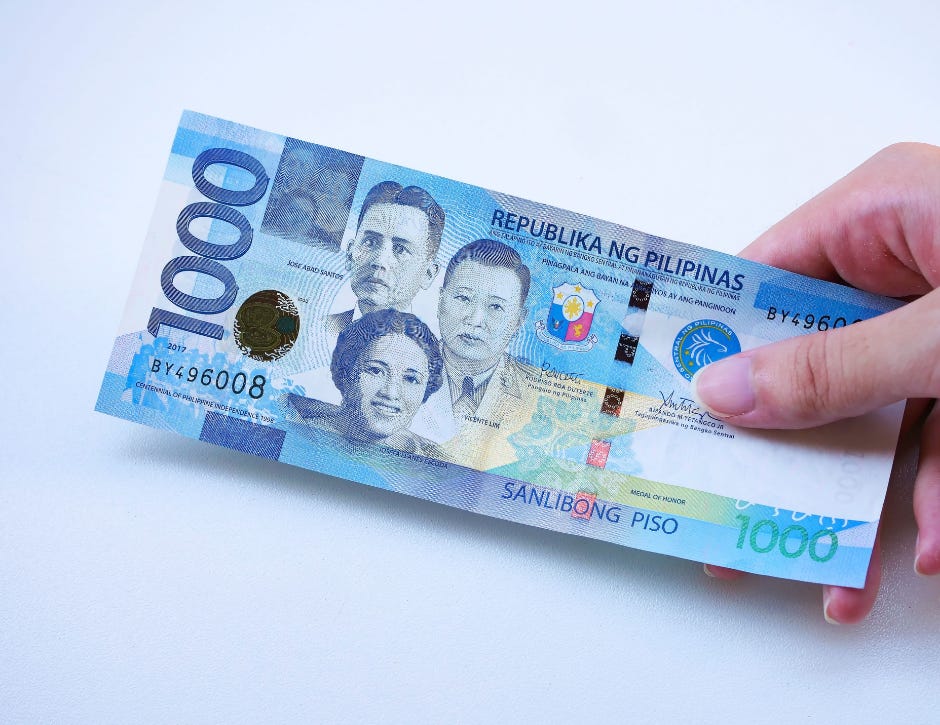
On April 21, Coins.ph announced that Filipinos could pay for Jollibee using USDT. The Bangko Sentral ng Pilipinas had authorized the move, allowing the local cryptocurrency exchange to route dollar-pegged stablecoins through QRPh, the national QR payment system it created and manages. At checkout, stablecoins convert automatically to pesos. Merchants receive pesos. The transaction completes on the domestic payment infrastructure.
Coins.ph described it as “game-changing,” noting how 700,000 QRPh-enabled merchants are now reachable via USDT and USDC. The framing was correct as far as it went, but it missed the structural question underneath the announcement: what happens when foreign-currency instruments operate inside its own sovereign payment infrastructure?
Why the Philippines?
Overseas Filipino workers remit approximately $37 billion each year, accounting for about 8 percent of the country’s GDP. This sizable group regularly manages dollar transactions, compares transfer costs, and responds to fluctuations in the peso’s value. These conditions have made dollar-linked instruments practical for Filipinos, even before Coins.ph integrated with QRPh.
The announcement met an audience already familiar with digital finance. GCash and Maya have introduced many Filipinos to mobile-first payments, making them comfortable transacting outside traditional banks. Between 7 and 12 million Filipinos now use cryptocurrency, with stablecoins gaining popularity among families receiving remittances, freelancers paid in dollars, and traders moving funds between crypto investments. According to Coins.ph, families of overseas workers have begun using USDT to protect against peso depreciation and avoid high bank transfer fees.
When the peso reached a record low of PHP 61.72 to the dollar on May 15, its second consecutive record low, the incentive to retain dollars rather than convert to pesos increased significantly. These factors are not merely background conditions but active mechanisms. The integration did not create demand for stablecoins in the Philippines; instead, it provided an entry point into the formal payment economy.
The dollar question
The BSP has been operating under an explicit policy of non-internationalization of the peso. Without control over domestic currency circulation, a central bank’s ability to set monetary conditions and manage inflation is diminished. BSP Circular 922 (2016), which regulates cross-border currency transfers under the Manual of Regulations on Foreign Exchange Transactions, states that outward transfers of legal tender exceeding PHP 50,000 require prior BSP authorization to safeguard “control of liquidity and overall monetary conditions.”
Dollar use has always existed informally in the Philippines. But the BSP could tolerate informal dollar exposure because it was fragmented, structurally outside the official payment system, and therefore outside the liquidity dynamics it was actively managing. For example, In practice, traders use stablecoins to park funds between crypto positions.
However, the Coins.ph integration ends the BSP’s ability to look past informal dollar exposure. Dollar-pegged assets now flow through infrastructure that the BSP created, governs, and explicitly maintains as the mechanism for a “safe, convenient, and interoperable payment system” nationwide. That QRPh converts stablecoins to pesos at the point of sale is technically significant, but it does not resolve the upstream question: households and merchants now have an institutionally sanctioned pathway to hold, transact with, and in periods of peso weakness, prefer dollar-linked instruments within the formal economy.
This is the line the IMF has been tracking. It’s 2025 departmental paper on stablecoins identifies currency substitution facilitated by stablecoins as categorically different from informal dollar use. Traditional dollarization requires physical cash or bank accounts denominated in foreign currency, which entails opening a foreign-currency bank account that requires documentation, minimum balances, institutional access, and often physical proximity to a branch. But foreign currency-denominated stablecoins face none of those constraints as they reside entirely on smartphones and the internet, operate continuously, and settle near-instantly at potentially low cost. The IMF further notes that network effects accelerate the replacement of local currencies once adoption begins. Local alternatives struggle to compete unless they provide similar utility and integration, and if a significant portion of economic activity shifts to foreign-currency-denominated stablecoins, the central bank’s control over domestic liquidity weakens, and seigniorage income declines as demand for the local currency decreases.
BSP’s position
What makes the BSP’s posture particularly difficult to read is that five months before the Coins.ph integration went live, its own leadership was articulating exactly the opposite position. Speaking in Hong Kong in November 2025, BSP Deputy Governor Zeno Abenoja confirmed the central bank was maintaining a “cautious approach” to stablecoin proposals, that regulatory work remained at an “early stage,” and that the BBSP was limiting stablecoin entry to controlled channels, insisting on licensed intermediaries and regulated frameworks before permitting broader integration. Most of the proposals being reviewed, Abenoja noted, involved dollar-backed stablecoins rather than peso-backed alternatives.
The BSP’s regulatory record does complicate the picture somewhat. The BSP’s regulatory record does complicate the picture somewhat. Since Circular 944 in 2017, the BSP has pursued a consistent strategy of bringing digital assets inside the regulatory perimeter rather than pushing them out. Licensing requirements for virtual currency exchanges, expanded oversight of Virtual Asset Service Providers under Circular 1108 in 2021, and a regulatory sandbox for fintech and crypto pilots under Circular 1153 in 2022 all follow the same logic: if an activity is happening regardless, regulate it rather than ignore it. The Coins.ph integration fits that pattern. Stablecoin flows through QRPh are now subject to anti-money laundering (AML) and know your customer (KYC) requirements. The BSP gains visibility over dollar exposure it previously could not measure, which is a policy benefit in a country where informal dollar circulation has always outrun official data.
With 7 to 12 million Filipinos already using crypto and stablecoin adoption accelerating through informal channels, the BSP faced a choice between two forms of dollar exposure: unregulated and invisible, or regulated and observable. Controlled integration, on that logic, is preferable to an offshore ecosystem that grows without generating any domestic data, regulatory handle, or policy leverage.
What visibility does not solve
Visibility is not control, and the distinction matters enormously when the peso is under pressure. The BSP can observe USDT moving through QRPh, but observation ends at the blockchain. Tether makes its reserve decisions from El Salvador, and US monetary policy is set in Washington. And when the peso depreciates, adjusting BSP rates does nothing for the share of retail transactions settling in these financial instruments.
When a currency depreciates, the rational household response is to hold dollar-linked assets rather than convert back. In this context, the QRPh integration does not merely accommodate existing stablecoin holdings - it also creates an institutionally sanctioned mechanism for that holding behavior to persist through the formal payment system. Monetary policy can still affect peso-denominated credit conditions, but its transmission weakens at the margin as more of the retail transaction economy touches instruments that do not respond to BSP rate decisions.
The IMF’s April 2026 working paper on stablecoin stability notes this: when stablecoin issuers hold risky or illiquid reserve assets, confidence shocks can trigger runs originating entirely outside Philippine monetary conditions, on a blockchain in another jurisdiction, with consequences that land on QRPh-connected merchant terminals the next business morning. Moreover, once a sufficient share of retail transactions migrates to foreign-currency instruments, the central bank loses traction on domestic liquidity, interest rate decisions in Manila stop transmitting to the parts of the economy settling on dollar-pegged rails, and seigniorage income falls.
The BSP’s FX Manual grants broad authority over cross-border currency flows, but stablecoin transactions through QRPh convert to pesos at the point of sale, which likely places them outside the Manual’s existing definitional perimeter. This gap between what the BSP can observe and what its existing tools can directly address was always theoretical. Now it can be seen as practical, with the peso at an all-time low and dollar-linked instruments now embedded in the national payment infrastructure.
The harder question
What the Coins.ph integration into QRPh ultimately depends on a question the BSP has not publicly answered. By accepting some short-term monetary friction, the BSP gains long-term regulatory oversight over a trend it realized it could not prevent. Features like peso-at-checkout conversion, KYC requirements, and a traceable ledger give regulators policy tools that peer-to-peer stablecoin use never offered.
However, the IMF’s 2025 paper explains what happens next. Once stablecoins are widely used for domestic payments, local options have a hard time competing because network effects support whatever is already built into the system.
But this integration also brings up a question the BSP has not addressed yet. Can a central bank expand its payment system to include dollar-linked instruments without eventually encouraging dollarization?
This article reflects reporting and analysis made by The Southeast Asia Pacific Frontier. If you have additional context, a different take, or a perspective we’ve missed — whether you’re a researcher, a policy practitioner, or someone living with these realities on the ground — this is an evolving story and we’d like to hear from you. Drop a comment below or get in touch.
About Matthew Parra
Matthew Parra is a student at the University of Santo Tomas and the founder and Executive Director of The Southeast Asia Pacific Frontier — an independent analytical platform dedicated to rigorous, evidence-grounded analysis of Southeast Asia and the Pacific across economics, society, and geopolitics.
