


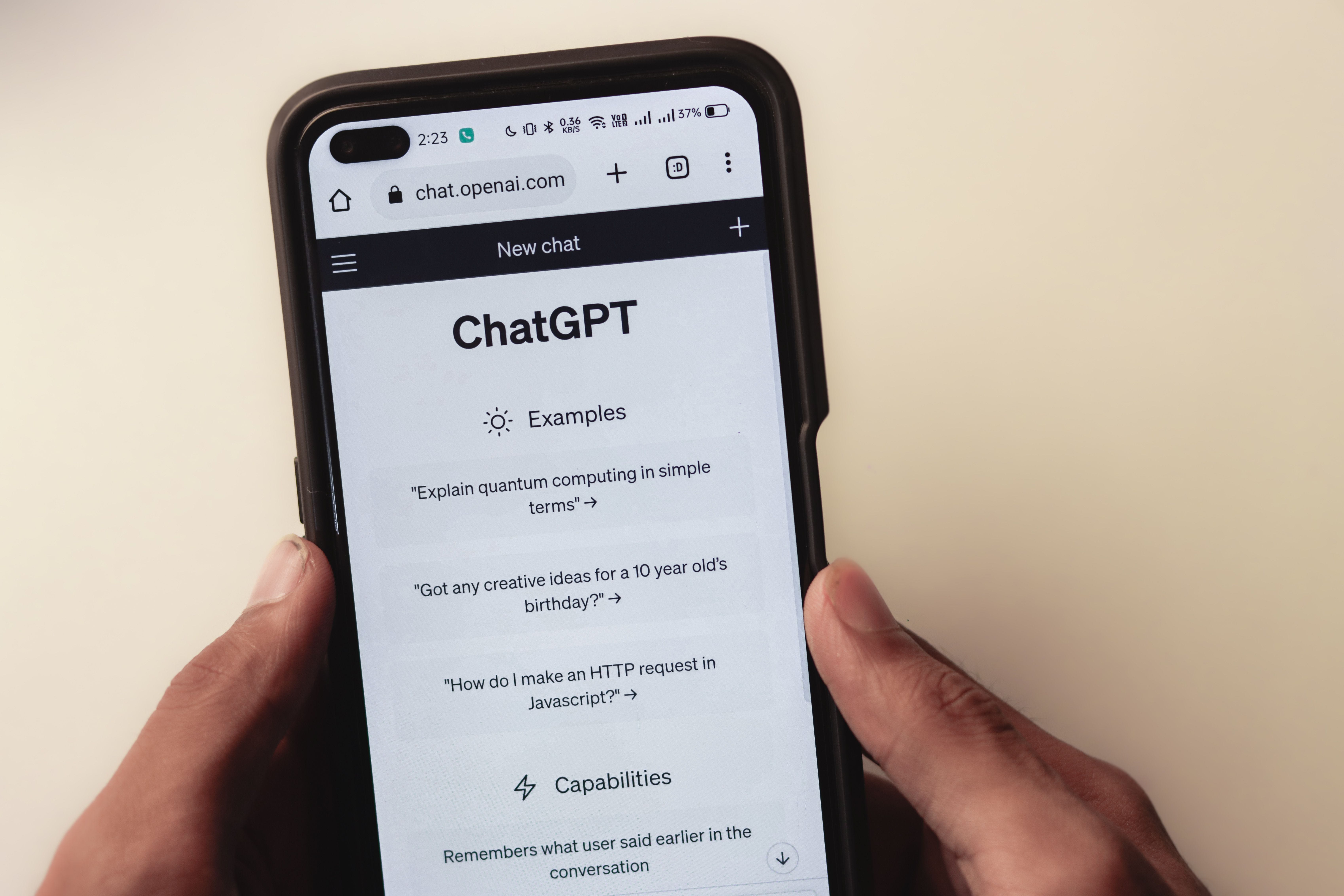
The portrayal of Artificial Intelligence (AI) as a dominant force has historically relied on images of massive machines and futuristic supercomputers. However, the current trajectory of AI has changed significantly. AI is now within everyday communication, entertainment, and business, often becoming indistinguishable from the human activities it imitates.
In July 2026, the South China Morning Post reported an incident in which an individual joined a private Zoom meeting with Singapore’s Prime Minister Lawrence Wong, President Tharman Shanmugaratnam, cabinet minister Indranee Rajah, and several foreign dignitaries to discuss funding related to the Strait of Hormuz.
The individual had received a WhatsApp invitation, purportedly from the cabinet secretary, requesting financial assistance. In reality, every person in that meeting, including Lawrence Wong, was generated by AI. During the call, the AI-generated version of Wong expressed gratitude before a fraudulent lawyer continued the conversation, ultimately convincing the victim to transfer 4.9 million SGD (approximately USD 3.8 million) to a fictitious account. According to the Singapore Police Force, the incident was one of several sophisticated scams targeting business professionals who had previously interacted with government officials.
While this represents an extreme case, the underlying capability—AI producing output indistinguishable from human work—is now widespread across the internet. This trend is evident in the rapid growth of AI-generated media. Research by video editing company, Kapwing, published in December 2025 found that between 21% and 33% of YouTube Shorts were AI-generated. Similarly, Kapwing reported that approximately one-third of the first 500 Shorts viewed by a new user were AI-generated.
A similar pattern is observed in written content. The SEO firm Graphite reported a sharp increase in AI-generated articles following the release of OpenAI’s ChatGPT in late 2022. In that year, approximately 10% of a random sample of 65,000 articles appeared to be AI-generated. Within two years, this figure had risen to more than 40%. Separate research by Amazon Web Services reached an even broader conclusion, estimating that roughly 57% of all text on the web is either AI-generated or translated using AI algorithms.
These figures, however, require important context. A high proportion of AI-generated content does not necessarily imply malicious intent or low-quality information. As AWS notes, this estimate also includes software code, automated translations, graphic design workflows, text-to-speech systems, and countless routine organizational processes, where AI primarily functions as a productivity tool rather than a replacement for human authorship.
Moreover, Graphite used Surfer’s AI detector to analyze Common Crawl, the world’s largest publicly available web archive containing billions of webpages used by researchers and AI developers. Examining text in 500-word segments, the detector estimated that more than half of the sampled content was generated by AI. Yet the approach itself is an inherent limitation: AI was being used to classify AI-generated text, while failing to account for the increasingly common practice of using AI to edit, translate, or refine content originally written by humans.
What the numbers do establish, however, is scale, and a growing public awareness that has not caught up to it. This is because, I argue, AI generation today falls into two categories: content that is virtually indistinguishable from human work, and content that is overtly synthetic, mass-produced, and created with minimal effort.
The first category shows AI’s ability to imitate human communication. Francesco Agnelli, a lecturer in digital and data studies, argues that “the line between human and machine authorship is blurring, particularly as it’s become increasingly difficult to tell whether something was written by a person or AI.” The 2026 International AI Safety Report reinforces this observation. In one study, participants incorrectly identified GPT-4o-generated text as human-written 77% of the time after only a five-minute conversation.
This difficulty also exists well beyond text. The same report summarizes multiple studies showing that people consistently struggle to identify AI-generated deepfakes. For audio, one study found that participants mistook AI-generated voice clones for the real speaker in 80% of cases. Video presents similar difficulties. A 2026 Malwarebytes survey found that participants correctly identified high-quality deepfake videos only 24.5% of the time, with detection accuracy falling to just 29% for content generated by the newest models. The survey also noted that by 2022, nearly nine in ten adults reported that they could no longer reliably distinguish real content from AI-generated media, compared with roughly two-thirds only a year earlier.
The second category is commonly referred to as “AI slop”—AI-generated content characterized by minimal effort, low production quality, and mass replication. Early examples, such as the viral “Will Smith eating spaghetti” video and the “tung tung tung sahur” meme, were often dismissed as internet curiosities. However, Jessica Davies, managing editor of Digiday, argues that the scale of AI slop has expanded dramatically. Today it is an increasingly common feature on platforms such as Facebook and YouTube.
The phenomenon is particularly visible on YouTube. For example, searching for philosophy or history often produces nearly identical videos featuring calm AI narration, stock footage, and generalized scripts that summarize complex subjects without citing sources. Fliki, a text-to-video AI platform, openly encourages aspiring creators to capitalize on this formula. Among its recommendations are choosing enduring topics such as Stoicism, Buddhism, or Taoism; condensing their central ideas into a 10- to 15-minute script; generating narration with a “calm, authoritative AI voice”; and pairing it with royalty-free footage of nature or ancient landmarks. It even recommends titles such as 10 Stoic Rules for a Better Life because of their consistent popularity.
History content has followed a similar trajectory, albeit with greater emphasis on entertainment. The Guardian highlighted this trend in June 2026 through the success of Chloe VS History, an AI-generated “time traveler” persona with more than 610,000 Instagram followers and over 15 million YouTube views. Its popularity has since inspired numerous copycat accounts, including Janella Through Time, Nova VS History, and Esmetimetravels.
Yet AI slop extends well beyond video platforms. Davies identifies a parallel ecosystem of AI-generated websites that rely on plagiarized articles, fabricated authors, and fictitious bylines, and generate advertising revenue within months of launch. Citing data from Deepsee.io, she notes that the number of identified AI slop websites increased by 717% in a single year. Deepsee’s blocklist of MFA (Made-for-Advertising) and AI slop domains grew from 17,124 websites in June 2024 to 108,270 by May 2025, of which 96,791 were classified specifically as AI slop.
This trend shows no signs of slowing, and increased awareness alone is insufficient to address it. AI-generated content is inexpensive to produce at scale, and content creators are capitalizing on this aggressively. For example, in advertising, 83% of executives now report that their company has deployed AI in the creative process, up from 60% two years earlier. Cost efficiency, which ranked fifth among AI’s benefits in 2024, is now the most frequently cited reason for adoption, surpassing creative innovation.
Pockets of humanity
The scale at which AI has enabled individuals and corporations to produce content is substantial. However, emerging evidence suggests that people are often resistant to AI-generated content, particularly when its origin is not disclosed. A study conducted by YouGov in Hong Kong, Indonesia, and Singapore found that 80% of participants wanted AI-generated content to be explicitly identified as such. Additionally, research by the Nuremberg Institute for Market Decisions saw that knowing something was made with AI led to decreased trust and reduced engagement, even when the content was technically polished. This phenomenon was called a ‘trust penalty,’ which reflects a bias in which people respond negatively to content they know to be or suspect to be machine-generated, regardless of its quality.
This trust penalty indicates that people continue to value human involvement and are cautious in its absence. This sentiment is influencing how creators present their work. For example, director Vince Gilligan concluded his 2025 series Pluribus with an explicit message stating ‘was made by humans’ as a protest against AI-generated content. Similarly, the audio company iHeartMedia, after research revealed that 100% of listeners preferred media created by people, instructed its DJs to announce their shows as ‘Guaranteed Human.’
The same goes with readers, who are increasingly drawn to long-form writing produced by identifiable individuals. Substack, for example, hosts 50 million active subscriptions, of which 5 million are paid. By April 2026, nearly 100,000 publications were generating revenue on the platform, double the number from the previous year, with approximately 30,000 based outside the United States. This is despite the Substack model operating differently from those of similar platforms, as it features no advertisements or algorithmic feeds optimized by AI.
Across Southeast Asia, the desire for human connection is also manifesting in physical gatherings. These movements do not explicitly identify themselves as responses to AI, however participants seek the experience of being present with another person. In Jakarta, Indonesia, the Baca Bareng Silent Book Club draws hundreds of people to a South Jakarta park for a single uninterrupted hour of public reading, with no fees, sponsors, or advertisements. Its founder, Hestia Istiviani, describes reading together in a public park as a political act, a means of reclaiming shared space and asserting the right to use it.
Similar initiatives have emerged in Tuguegarao, Philippines, where InBetweenChapters, a local book club, has grown from one founder to nearly 40 regular participants. Their premise is to read a book independently and engage in discussion afterward.
Where do we go from here?
AI is not slowing down. Investment, policy, and demand are all climbing, and the technology will keep moving into work that people once did by hand.
However, the core issue does not lie with the tool itself, but with its impact on an internet ecosystem designed to reward engagement and optimized content. When content is nearly free to produce, almost indistinguishable from human work, or easy to scale, the difference between human and AI-made content blurs.
This creates a loop: inexpensive content supply meets engagement-driven distribution systems (i.e Facebook and Youtube), and the two perpetuate each other without direct oversight. However, public responses such as the trust penalty, disclosure demands, and “made by humans” labels all reflect a common concern that the presence of a human creator is important in establishing trust.
You cannot argue out of this loop. Instead, it requires building communities and connections that the dynamic cannot reach.
This article reflects reporting and analysis made by The Southeast Asia Pacific Frontier. If you have additional context, a different take, or a perspective we’ve missed — whether you’re a researcher, a policy practitioner, or someone living with these realities on the ground — this is an evolving story and we’d like to hear from you. Drop a comment below or get in touch.
About Matthew Parra
Matthew Parra is a student at the University of Santo Tomas and the founder and Executive Director of The Southeast Asia Pacific Frontier — an independent analytical platform dedicated to rigorous, evidence-grounded analysis of Southeast Asia and the Pacific across economics, society, and geopolitics.
