


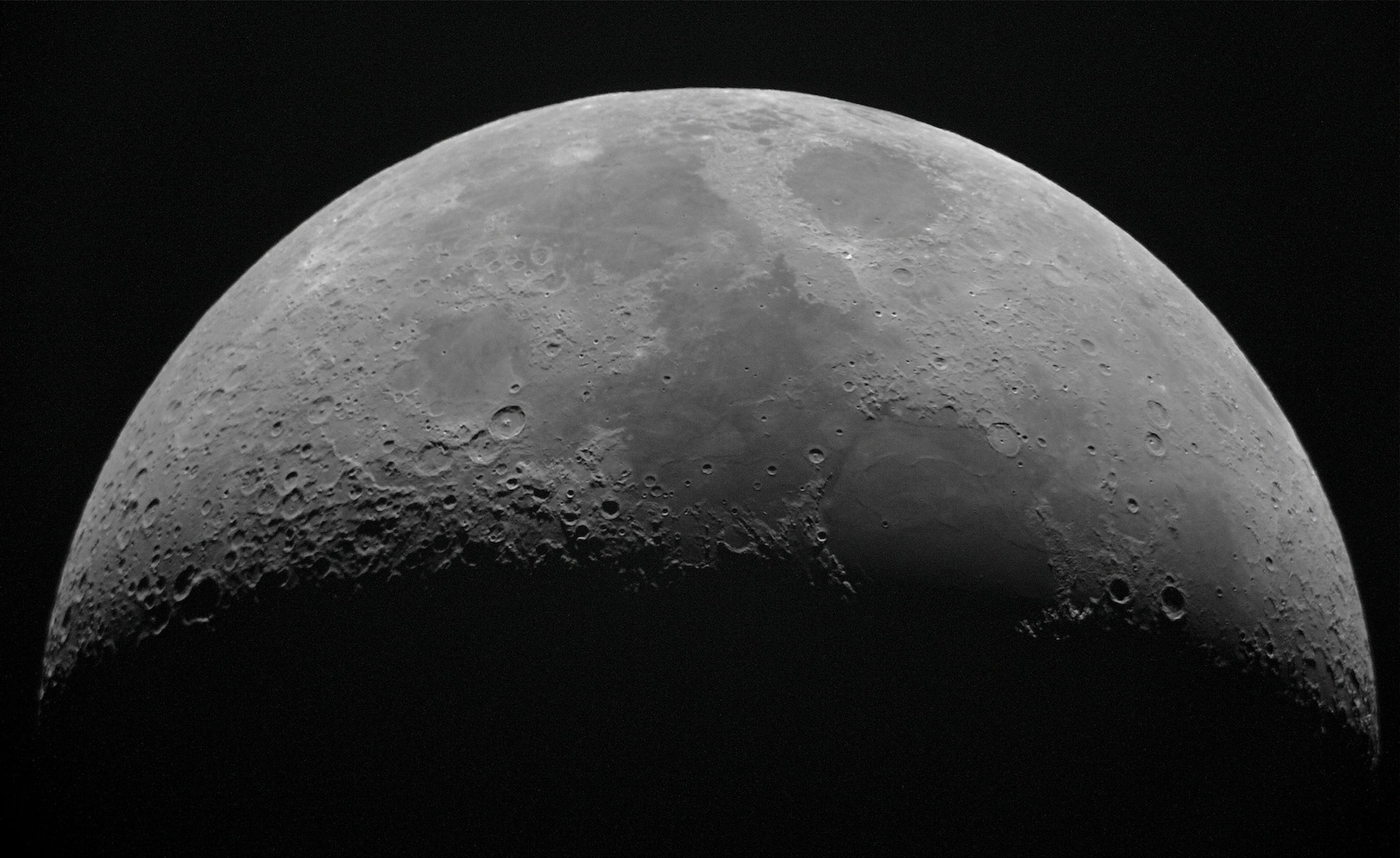
The United States’ Artemis program is more than just NASA’s traditional scientific mandate; the Artemis program is a pivotal move of Western power through the multinational alliance aimed at countering China’s International Lunar Research Station (ILRS) ambitions. This space rivalry marks the beginning of the global power marathon to set the next domain for global and space dominance, the lunar race between the US and China presents profound implications for Southeast Asia and the Pacific as both regions are involved in both powers’ alliances. Far from a mere discovery race, the new space race signals a new era of space warfare, where lunar footholds dictate the pace for future Mars missions, resource control, and terrestrial influences. Policymakers must view it as such to safeguard strategic equities. The new era for the space race is no longer a showing of scientific innovation prowess of the two sides, but it transcends space exploration as the next battlefield for global and space power.
The US’ Artemis program was launched in 2017, in close collaboration between the United States of America, Japan, Canada, the European Space Agency (ESA), and the United Arab Emirates under the Artemis Accords, which now has 45 nation signatories. Artemis targets a sustainable lunar presence by 2028, including a Lunar Gateway station and south pole bases that are believed to be rich in water ice for rocket fuel and life support to test humanity’s capabilities before taking on the next step, going to Mars.
This is no isolated NASA ingenuity, but a deliberate counter to China’s ILRS that aims to put the first non-American foot on the moon by 2030 with international partners like Russia, Pakistan, and others through the “Group of Governmental Experts.” China’s Tiangong station and Chang’e missions have demonstrated rapid progress, aiming for lunar helium-3 mining and military tech like precision landing. Artemis positions the US to enforce the Outer Space Treaty of 1967 norms, such as the peaceful use and no sovereignty claims. While China denies unilateral dominance. Think of it as NATO for space, wherein shared infrastructure secures US leadership in cislunar space (Earth-Moon sphere), where it is vital for satellite defense and supply lines.
In the context of the Southeast Asia region, the region’s chokepoints amplify lunar stakes as US allies like Japan, Australia, Singapore, and the Philippines, which is an active signatory of the Artemis Accords, bolster its program with tech and basing rights, this move counters China’s existing Belt and Road space ties with Thailand, Indonesia, Malaysia, and Cambodia.
The Philippines hosts US rotational forces under its Enhanced Defense Cooperation Agreement (EDCA) with the United States. This enables Pacific launch monitoring, like Australia’s Harold E. Holt station, which tracks lunar trajectories, and Japan’s H3 rocket, which supports Artemis cargo.
Other Southeast Asian nations are also active on China’s bid on lunar missions, as Indonesia is eyeing ILRS radar tech. Thailand, on the other hand, is a signatory of both the Artemis Accords and China’s space alliance with Thailand, which trains Chinese astronauts. Malaysia is also an active agent as its space agency partners with China’s Chang’e mission data.
Its implications are that lunar success yields pacific leverage, the United States bases could track hypersonic threats from lunar relays, which China could weaponize lunar south pole helium-3 for fusion energy, tilting ASEAN energy security that is currently in a volatile state. Tensions mirror the current South China Sea disputes as space assets could jam regional GPS or enable surveillance, forcing SEA nations like Vietnam (US partner) or Laos (China partner) into alignment dilemmas.
This scientific race for a breakthrough also echoes a race for new global and space power. Take a closer look, as this is a hybrid warfare in orbit. Lunar bases enable persistent presence for kinetic anti-satellite tests, cyber ops on rival sats, or even resource denial, which both sides have done in the past. This 21st-century space race echoes Cold War proxy battles but with trillion-dollar economics at stake as the lunar economy is projected at least $100 Billion by 2040.
China’s 2024 anti-satellite test debris has endangered the International Space Station. Artemis envisions armed defense under the US Space Force. It is not just a race for discovery, but a race for domain control. The winners claim regolith rights, propellant depots, and Mars gateways, heavily marginalizing the loser of this race.
Lunar victories precondition future missions to Mars. Artemis’ Gateway tests deep-space habitats, while China’s ILRS prototypes nuclear propulsion. By 2039, which is NASA’s Mars goal, lunar helium-3 could fuel reusable Starships, while ILRS enables rival landers. A US-led Moon secures Pacific Mars trajectories. China’s race for dominance invites exclusionary blocs, risking arms races. For Southeast Asia, Mars tech spillovers promise economic growth, but alliance choices lock in dependencies, as the US is for open access, while China is for closed tech transfer.
This article reflects reporting and analysis made by The Southeast Asia Pacific Frontier. If you have additional context, a different take, or a perspective we’ve missed — whether you’re a researcher, a policy practitioner, or someone living with these realities on the ground — this is an evolving story and we’d like to hear from you. Drop a comment below or get in touch.
About Tim Asturias
Tim Asturias is an undergraduate at the University of Santo Tomas and a Co-Founder and Executive Director of The Southeast Asia Pacific Frontier — an independent analytical platform dedicated to rigorous, evidence-grounded analysis of Southeast Asia and the Pacific across economics, society, and geopolitics.
