


When Philippine President Ferdinand Marcos Jr. announced that the Philippines had approximately 60 days of reserve gasoline, fuel oil, and kerosene following the closure of the Strait of Hormuz, the countdown began - at least in the headlines. The figures have inspired fear, calls to stockpile, and pointed questions about government mismanagement and preparedness.
The Philippines is not alone. Across the region, oil reserves of different countries are suddenly being measured against a number and found wanting at different degrees. Japan has 254 days, while Thailand has 61. China has 200 days, while Indonesia has 25. But reserves were never designed to measure how long a country can survive without energy imports. They exist to stabilize markets while global supply adjusts, specifically to prevent panic, smooth price volatility, and buy governments time. Essentially a strategic buffers against sudden supply chain disruptions such as the US-Iran war.
This is a misreading of the crisis. Focusing on counting down the days to which reserves last displaces the real issue because the crisis does not begin on day 61 when tankers run dry. It begins when prices move - and they already have.
How shock actually travels
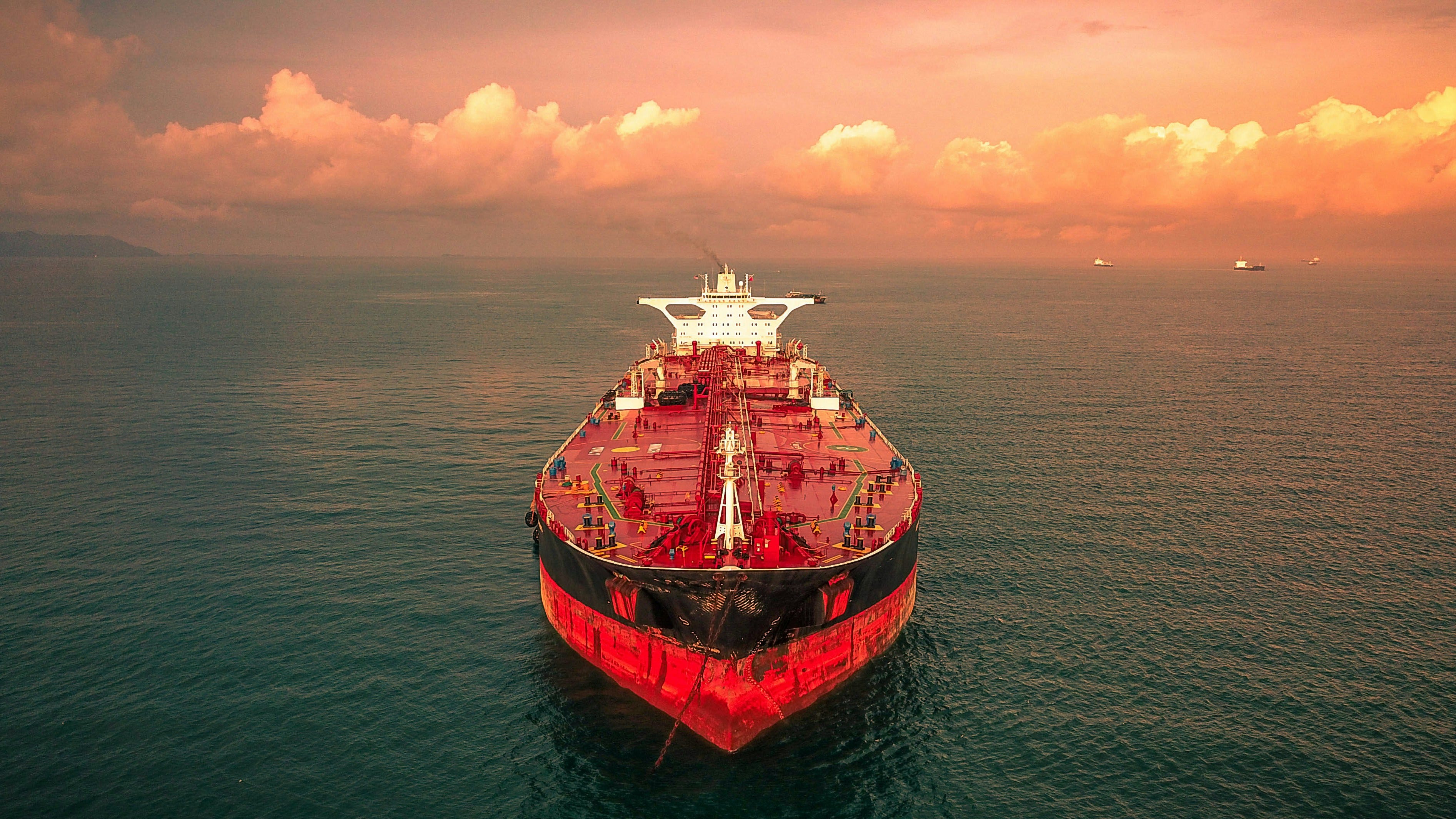
When the Strait of Hormuz closed the immediate problem is not that the region ran out of fuel. It was that among the 3000 vessels stuck inside the Persian Gulf, 200 oil tankers are physically trapped with nowhere to go. Iraq has already begun shutting down operations at the Rumalia oil field because tankers cannot leave and onshore storage is reaching its capacity. According to Marine Insight, only three tankers carrying 2.8 million barrels of oil crossed the straight on early March, far below the usual daily average of about 19.8 million. This is an 86% decline.
But markets do not wait for the physical shortage to run out before reacting because of how oil is bought and sold. According to research from the Revenue Watch Institute, two-thirds of all traded oil moves through long term contracts between producers and refineries. These are agreements that give both sides predictability over supply and demand. The remaining third is sold on the spot market, where individual barrels are bought and sold in real time. That small share matters disproportionately because long term contracts don’t have fixed prices. They are rather written with formulas tied to whatever the spot market says oil is worth at delivery. This means spot prices set the benchmark for the entire system.
On top of this is the layer of futures trading. Futures contracts, or the agreement to buy or sell oil at a fixed price on a future date, are traded on exchanges in volumes the exceed physical supply. When traders anticipate a supply disruption, they bid up futures prices immediately, then spot prices follow, and because term contracts are pegged to spot, the reprice cascades across the whole market at once.
While this structure is designed to price risk in advance, it also means that he moment news of the Hormuz closure broke, markets were already repricing every barrel that would need to move through or around that strait in the weeks and months ahead.
On March 6, crude futures rose to their highest level in two and a half years, climbing 12% to $90 a barrel. International Brent crude followed the surge over 28% to above $86 a barrel in the days following the closure. JPMorgan Chase warned that prices could spike to $120 per barrel if disruption in the strait is sustained, estimating that Gulf producers can only sustain normal production for roughly 25 days.
Moreover, because oil is priced and settled in US dollars, the exchange rate matters as much as the barrel price for the Philippines and Southeast Asia. According to ING Think, even a brief oil price spike in June 2025 was enough to pull down the Philippine peso, Korean won, Thai baht, and Japanese yen by roughly 1.5 to 3%. The Philippine peso depreciated to around 59 per dollar in early march, a historical low, as risk sentiment deteriorated alongside the conflict. What this means in practice is that the the region pays more for oil in dollars at the exact moment its currency buys fewer dollars.
That double hit then travels through the economy in a chain that reaches ordinary households long before the supply of oil actually runs out. For example, transport costs rise first with fuel surcharges on trucking, fare increases on public transport, higher operating costs for fishing boats and delivery vehicles. According to ING Think Regional Head of Research for Asia Pacific, Deepali Bhargava, inflation in the Philippines could climb up to 0.4% for every 10% increase in oil prices. A price shock of this magnitude, coupled with peso depreciation, could push Philippine inflation to the upper end of the BSP’s 2-4% target range.
The picture is not unique to the Philippines. According to MUFG Research, Thailand, Vietnam, the Philippines, and South Korea are the most sensitive economies in Asia to oil price increases, with CPI inflation projected to rise by between 0.1 and 0.9 percentage points across the region. Under the assumption of a six-week Hormuz closure and oil prices rising from $70 to $85 a barrel, regional inflation across Asia could rise by 0.7 percentage points, with the Philippines and Thailand the most vulnerable.
Who was always going to be exposed?
That vulnerability did not begin with the Hormuz closure. When governments and analysts compare reserve levels across the region, it is easy to read these numbers as a performance table. Simply a ranking of which countries planned well and which didn’t. Japan at 254 days, South Korea at 208, China at 200. Thailand at 61, The Philippines at 60, and Indonesia at 25. The assumption is that these gaps reflects choices and that better choices would have produced better numbers, but that assumption misses something important.
The 90-day reserve standard that serves as the global benchmark was established by the International Energy Agency, whose membership obligation requires countries to hold stocks equivalent to at least 90 days of net oil imports and to be ready to collectively respond to severe supply disruptions.
It is a standard designed by and for IEA member countries, which in the region include Australia, Japan, South Korea, and New Zealand. However, most of the region are only Association countries in the IEA because in part because full membership requires holding oil stocks equivalent to at least 90 days of net imports. But according to the IEA’s Southeast Asia Energy Outlook, mandatory oil stockpile regimes across the region are generally only equivalent to fewer than 40 days of oil use and in some cases as few as six days.
According to an IEA-affiliated study on oil stockpiling options for Southeast Asia, financial constraints are among the most common factors slowing down oil stockpiling across the region. Crude purchases alone account for at least half the total cost of maintaining reserves, with significant capital and operational expenditures layered on top of storing and distribution. For example in Indonesia, the financial burden of oil stockpiling was estimated at over $1.1 billion in 2015 alone.
Storing oil is expensive and it ties up capital that developing economies cannot afford to lock away under normal conditions. According to the IEA’s report on energy security in ASEAN+6, developing emergency oil response capabilities and integrating them into global supply security mechanisms will take time and money, precisely the two things fiscally constrained economies have the least of. The result is a reserve gap that reflects not poor planning in the abstract, but constrained choices made under imitations.
The other constraint is where the oil comes from in the first place. Even if the region’s economies could build larger reserves, they would largely be filling them with Middle Eastern crude. Asia imports 60% of its crude oil from the Middle East, and the Philippines sources 90% of its oil imports from the region. Diversifying away from that dependence is not simply a matter of finding new suppliers, it requires retooling the refineries themselves.
“If you put a new crude into the refinery, you have to change the cutoff points. You have to change gasoline blending. There’s a lot of things you need to change. It’s hard work. This is why diversification has been so poor in a lot of countries,” Adi Imsirovic, director of consultancy at Surrey Clean Energy, explains.
The implication is that even the will to diversify runs into a physical ceiling. Refineries across the region were built and configured around Middle Eastern crude. This includes the specific density, sulfur content, and chemical composition of said crude - a product of decades of infrastructure built around a single supply corridor.
“Simply put, even replacing a modest share of the roughly 16 million barrels a day of Middle Eastern crude that arrives to Asia with Atlantic basin supply is not feasible,” Energy Aspects analyst Richard Jones said.
What energy security actually means here
According to a peer-reviewed study on global energy security, countries including the Philippines, Myanmar, and Cambodia were already in a precarious position before the strait closed, held back by poor energy resource endowments and limited domestic production capacity.
The panic about reserve levels treats that vulnerability as a policy problem, one that better preparation might have prevented. But the region was never fully inside the global energy architecture to begin with. The IEA’s 90-day benchmark, its emergency coordination frameworks are membership obligations, and most of Southeast Asia and the Pacific sits outside full membership precisely because meeting those obligations requires resources the region doesn’t have.
The 60-day countdown obscured all of that. It made a structural problem legible as a planning failure, which is a more comfortable story because planning failures have solutions. Structural ones are harder to sit with.
None of this fully excuses the choices made within those constraints. A 90% import concentration from a single region reflects fiscal limitation, but also decades of institutional inertia. Both are true at the same time, and both are part of what needs to change.
But the harder question, the one the Hormuz crisis leaves sitting with this region, is not simply how to build more reserves or diversify supply lines. It is what energy security actually means for economies that were never fully designed into the system meant to provide it. And whether that system, as currently built, is even capable of answering that question.
This article reflects reporting and analysis made by The Southeast Asia Pacific Frontier. If you have additional context, a different take, or a perspective we’ve missed — whether you’re a researcher, a policy practitioner, or someone living with these realities on the ground — this is an evolving story and we’d like to hear from you. Drop a comment below or get in touch.
About Matthew Parra
Matthew Parra is a student at the University of Santo Tomas and the founder and Executive Director of The Southeast Asia Pacific Frontier — an independent analytical platform dedicated to rigorous, evidence-grounded analysis of Southeast Asia and the Pacific across economics, society, and geopolitics.
