


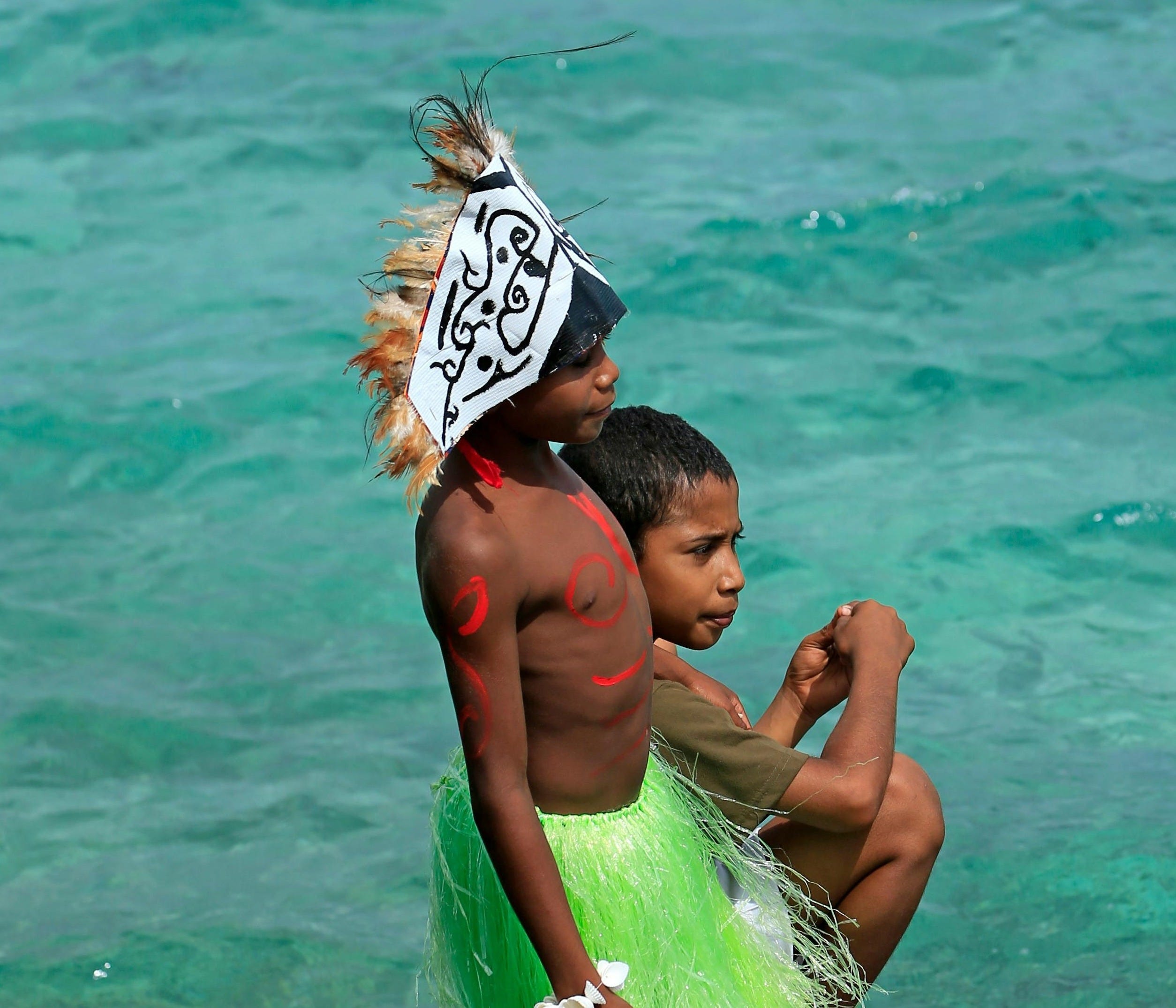
According to the World Health Organization (WHO), nine of the ten most obese nations globally are in Oceania. Once a symbol of wealth, obesity here now starkly indicates the opposite: severe food insecurity and systemic poverty. This health crisis is the product of historical colonialism and modern economic structures failing island nations. The Pacific, once home to self-sufficient navigators, is now the epicenter of a metabolic crisis tied to structural dependency, reflecting a profound failure to respect Oceania’s fragile ecological and social balances.
A forced transition: From subsistence to dependency
Historically, Micronesians and Polynesians utilized advanced navigation techniques, subsisting on highly preserved, nutrient-dense foods like breadfruit and taro to survive arduous voyages. Their traditional diet and extreme physical demands favored a strong phenotype capable of efficiently storing nutrients—a survival mechanism for islands susceptible to food shortages. Islanders historically displayed high adaptability; in Tikopia, sustainable practices like rudimentary reforestation were utilized to maintain agricultural harmony, while strict social controls, such as Hawaii’s kapu system, regulated resource consumption.
However, colonial eras dismantled these sustainable systems. Colonizers repurposed islands for extractive industries—phosphate mining in Nauru, sugar in Fiji, and various cash crops—displacing local agriculture and turning fertile grounds into export-driven monocultures. This forced transition from subsistence to a cash-based economy stripped locals of their means of production. Furthermore, modern overfishing by international fleets has put 11% of indigenous fish species at risk, eroding traditional protein sources.
Lacking healthy staples, islanders are forced to rely on global markets for basic needs. Obesity in this context is a survival strategy of the poor, who must consume the cheapest, lowest-nutrient calories to stave off hunger, resulting in a population that is overfed but tragically malnourished.
Structural traps: Spatial poverty and food dumping
The root causes of this crisis are deeply embedded in modern Pacific infrastructure. Decades of resource extraction have left many islands agriculturally unviable. In Nauru, strip mining for phosphate has turned the island’s interior into a wasteland of jagged limestone, forcing the population into crowded coastal strips where traditional farming is impossible and automobile-centric infrastructure discourages walking. Similar spatial constraints in Tuvalu and American Samoa leave little room for agriculture or exercise facilities.
Compounding this spatial poverty is the systemic “dumping” of low-quality food imports. Countries like Australia and New Zealand export mutton flaps—sheep bellies that are nearly 50% fat and deemed unfit for Western markets—to Pacific nations at extremely low prices. These cheap, high-fat meats, alongside refined sugars and white flour, become the primary food sources for impoverished families. Even humanitarian aid often arrives as processed canned goods, reinforcing an obesogenic environment that traps the Polynesian build in a cycle of severe obesity and compounding poverty.
Cultural nuance and the limits of the colonial narrative
While the colonial and economic narrative is powerful, viewing Pacific Islanders solely as victims erases local agency and cultural nuance. Historically, many Pacific cultures associated larger body sizes with high social status and health—a standard predating colonial contact. Though modern food marketing weaponizes this preference, it remains a distinct internal factor complicating a purely economic analysis. Additionally, local governments have sometimes failed to prioritize public health during economic booms.
The crisis is also shaped by internal migration and the challenges of small-scale island governance. Severe obesity and limited local opportunities have forced many to migrate to the US mainland, Australia, and New Zealand, where they face discrimination and high rates of depression and alcoholism, straining already fragile medical infrastructures. Acknowledging these complexities provides a holistic view. Solutions require synthesizing traditional wisdom with modern public health, rather than blindly adopting Western medical models or simply romanticizing a pre-colonial past.
Charting a path forward: Sovereignty and sustainable health
Combating this crisis requires systemic change and localized empowerment. Countries that historically extracted wealth from these islands bear a responsibility to fund infrastructure, nutritional education, and healthcare initiatives. Simultaneously, there is a positive grassroots trend toward fitness and community sports, such as youth basketball leagues in the Marshall Islands, which must be expanded.
To reduce reliance on foreign aid and imported food, islands must develop sustainable, non-extractive revenue streams. Tuvalu’s successful leasing of its .tv internet domain stands as a prime example of innovative economic development. Furthermore, governance must involve the wider populace through deliberative democratic processes, allowing communities to collaboratively design culturally appropriate health solutions. While geopolitical tensions complicate these efforts, the global shift toward green and healthy initiatives positions the Pacific as a natural focal point for progressive change.
Reclaiming health in Oceania
The obesity epidemic in the Pacific is far more than a public health failure; it is a profound symptom of historical and economic poverty. By dismantling self-sufficiency and forcing a dependency on low-quality global markets, colonial and modern governance structures created a crisis that the islands were unequipped to handle. Until underlying economic structures—trade imbalances, extractive land use, and food dumping—are addressed, health initiatives will remain temporary fixes. Obesity is a visible marker of a region struggling to reclaim its sovereignty.
Critical questions remain: Can Pacific nations achieve food sovereignty while integrated into the global economy? How can Western powers support sustainable development without imposing paternalism? Ultimately, can Pacific Islanders leverage their adaptive heritage to redefine “wealth” and “health” on their own terms? The answers will determine the viability of their nations in the decades to come.
This article reflects reporting and analysis made by The Southeast Asia Pacific Frontier. If you have additional context, a different take, or a perspective we’ve missed — whether you’re a researcher, a policy practitioner, or someone living with these realities on the ground — this is an evolving story and we’d like to hear from you. Drop a comment below or get in touch.
About Rocco Carmine B. Paragas Jr.
Rocco Carmine B. Paragas Jr. is a graduating Asian Studies student at UST, specializing in history and geopolitics. A versatile generalist with internship experience spanning HR to Knowledge Management across corporate and NGO sectors, he is currently writing his thesis on intergenerational gaps in Thailand.
