


Pax Silica is an unequal arrangement. The US gets supply chain security, mineral access, and a compliant jurisdiction insulated from the pressures of cross-strait uncertainty. The Philippines gets development infrastructure, foreign expertise, and a seat in the global tech ecosystem. That asymmetry is the architecture of the deal. And the Philippines has been here before.
On April 16, 2026, the US and Philippine governments announced the creation of an Economic Security Zone (ESZ) in New Clark City, Tarlac, centered on the development of Artificial Intelligence (AI). According to the US Embassy fact sheet:
“Under Secretary of State for Economic Affairs Jacob Helberg today announced the United States’ and the Philippines’ plans to establish a 4,000-acre industrial hub to secure inputs vital to American and global supply chains. The site is located in the Luzon Economic Corridor of the Philippines. The site — the first of its kind — is being designated by the Philippines as an Economic Security Zone, a new model for AI-native investment acceleration hubs being developed under the Pax Silica Initiative.”
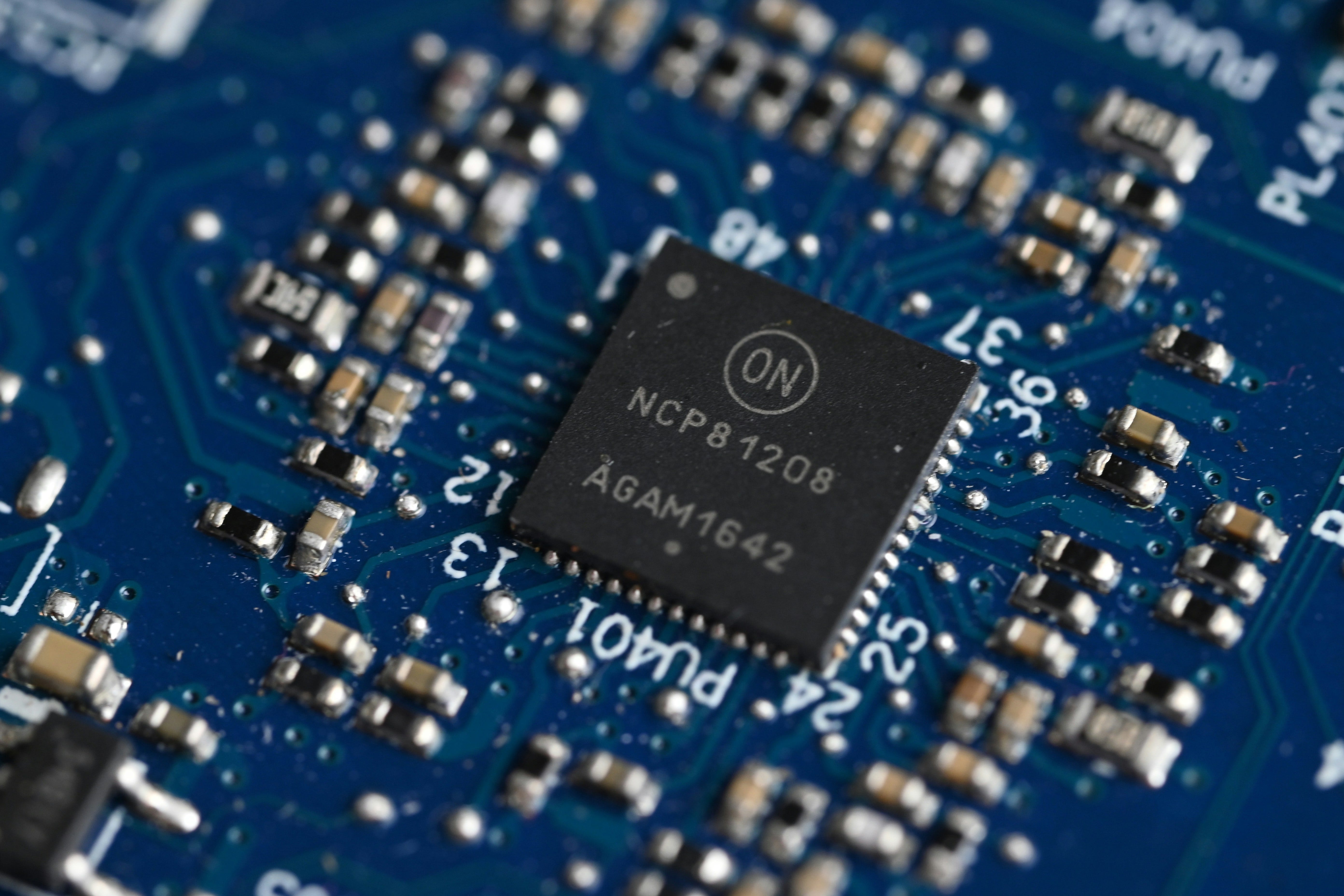
Current cross-strait tensions have made it vital for the US to look for alternatives in technological development. The Philippines, rich in critical earth minerals like cobalt, nickel, chromite, and copper, and home to a proven semiconductor workforce, fits. Policymakers like Philippine Department of Finance Undersecretary Frederick Go view Pax Silica as an opportunity to leverage domestic resources, secure critical nodes in global supply chains, and pioneer next-generation industries.
Domestic opposition, led by groups like the Makabayan bloc, views the alignment as a strategic liability by contending that tethering Philippine industrial policy to Washington’s defense sector risks Chinese economic or military retaliation, characterizing the move as a capitulation of state interests. The more productive question is: on what terms does the Philippines engage?
What the Philippines stands to gain
The Philippines is no stranger to semiconductors, with the sector making up 63–65% of its merchandise exports. However, because of corruption and insufficient power capacity, the industry has stagnated, focused on assembly, testing, and packaging (ATP) rather than fabrication. Pax Silica, if negotiated well, could be the mechanism that breaks that stagnation.
The ESZ would encourage international companies to establish operations in the Philippines, bringing expertise to advance and propel local industries. The Philippines would not only extract its critical mineral endowments but also process them domestically for semiconductor manufacturing — positioning itself as a vital hub in the global tech ecosystem. This would boost the national economy and expand job markets at a moment of rising unemployment, affecting even college graduates. Investments by the US and corporations could create infrastructure that can be taxed, and a wider job market for graduates in the IT and engineering sectors.
The US Embassy fact sheet notes this ambition:
“The Economic Security Zone is intended to fuse American expertise in institutions and legal regimes – internationally enforceable contracts, transparent regulatory standards, and expert dispute resolution – with enhanced access to the Philippines’ outstanding workforce and talent, mineral endowments, energy resources, and strategic position at the crossroads of Indo-Pacific trade.”
What the critics get right
Progressive and leftist groups, columnists, and everyday people online have raised legitimate concerns. Dan Somera has written that the US would have a two-year free lease of the ESZ, renewable for 99 years, as an “in-kind contribution” from the Philippines. The Makabayan bloc and Kilusang Magbubukid ng Pilipinas, progressive groups, have compared the ESZ to America’s former military bases in Clark and Subic, pointing to its diplomatic immunity provisions and the practice of US common law within its boundaries.
They fear the amplification of unsustainable mining, land grabbing, and militarization within the Luzon Economic Corridor. Critical discussion online has also centered on the power and water consumption demands of AI infrastructure and the environmental costs of expanded mining. Some analysts warn that job creation could be minimal, with American experts filling skilled positions while Filipinos are left with lower-value work.
The precedent that matters
The Clark and Subic bases offer the most instructive and most complicated precedent. For decades, the US military presence generated significant local economic activity: employment, commercial ecosystems, and infrastructure that became structurally embedded in the surrounding communities of Angeles and Olongapo.
At their peak, the bases employed tens of thousands of Filipinos directly, with estimates of total dependent employment, including service industries, running considerably higher. When Mount Pinatubo accelerated the American withdrawal and the Philippine Senate voted against lease renewal in 1992, the economic dislocation was severe enough that both cities faced prolonged depression before reinvention as the Subic Bay Freeport Zone and Clark Freeport Zone eventually took hold.
The infrastructure the Americans left behind, runways, port facilities, and utilities, became the foundation for post-base economic development. The arrangement had been asymmetric throughout: the US got strategic Pacific positioning, the Philippines got an economy built substantially around foreign military expenditure. The harm was real. Documented labor exploitation, environmental damage, and the social costs of base economies are part of the historical record and should not be minimized.
The argument here is narrower. Asymmetric arrangements, even extractive ones, can deposit durable infrastructure and economic capacity that outlasts the arrangement itself. Pax Silica can operate on a similar structural logic. The question for policymakers and civil society is not whether the arrangement is equal, it isn’t, but whether the Philippines can negotiate terms that maximize what remains after the Americans’ strategic interests have been served.
The window that remains open
The ESZ’s legal framework is still a work in progress. According to the US Embassy fact sheet, the Philippine and American governments are still discussing and finalizing the legal and development framework for long-term development. That unfinished status is leverage, not a red flag.
Jurisdiction, local hiring requirements, mineral processing terms, and environmental standards are all still on the table. Civil society groups and policymakers who oppose the ESZ’s current trajectory would do more by engaging that process than by opposing the zone’s existence outright. Outright rejection risks foreclosing the development pathways the Philippines needs. Proactive negotiation for parity, even if it means allowing Washington to claim the political win, could be the more strategically sound position.
The Philippines is at a crossroads. Pax Silica could represent a meaningful step in its economic development, but only if the Philippines enters the arrangement with clear-eyed awareness of what it is, what it is not, and what still remains to be determined. The government and Filipinos just need to pay attention.
This article reflects reporting and analysis made by The Southeast Asia Pacific Frontier. If you have additional context, a different take, or a perspective we’ve missed — whether you’re a researcher, a policy practitioner, or someone living with these realities on the ground — this is an evolving story and we’d like to hear from you. Drop a comment below or get in touch.
About Rocco Carmine B. Paragas Jr.
Rocco Carmine B. Paragas Jr. is a graduating Asian Studies student at UST, specializing in history and geopolitics. A versatile generalist with internship experience spanning HR to Knowledge Management across corporate and NGO sectors, he is currently writing his thesis on intergenerational gaps in Thailand.
