


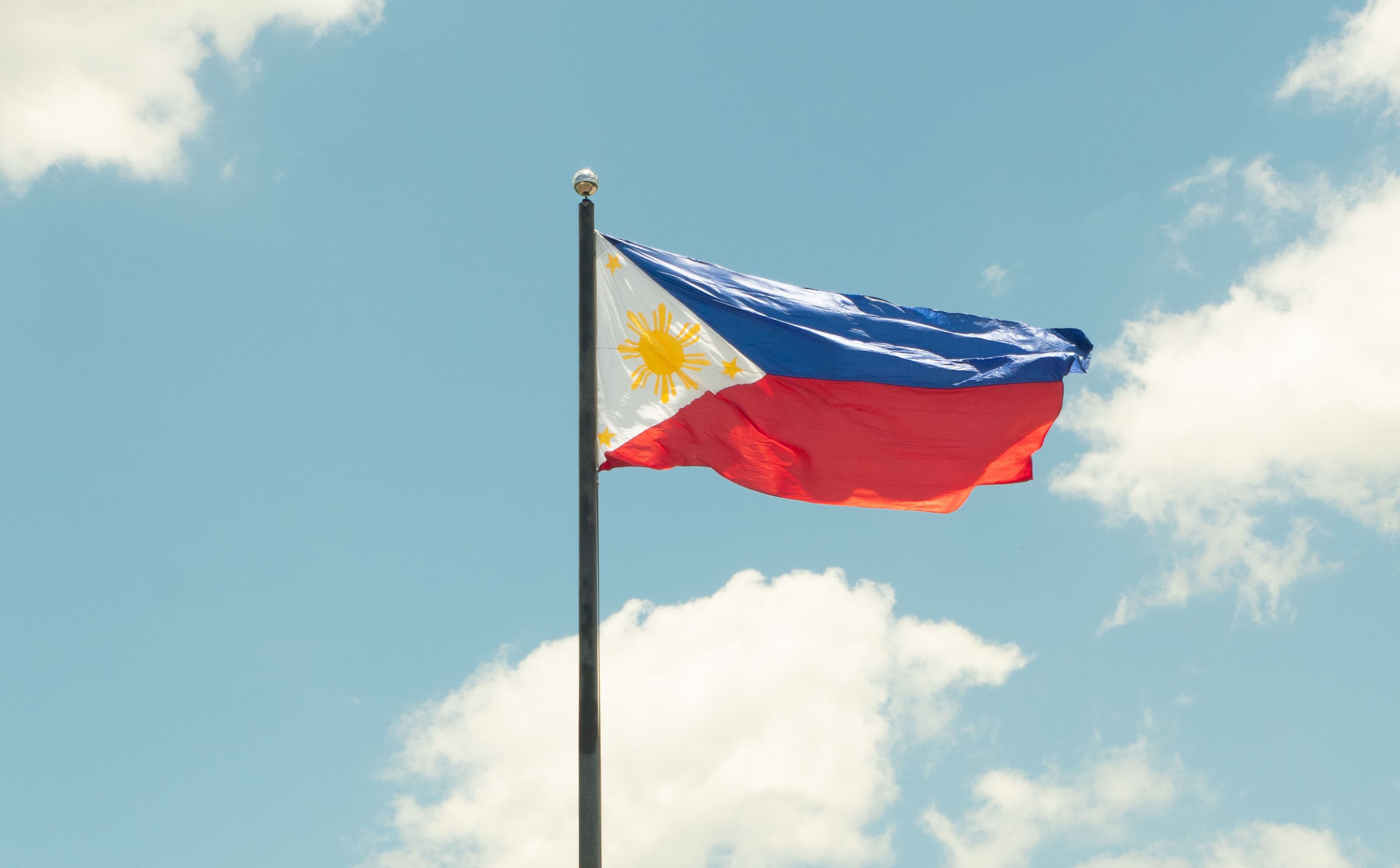
The Philippines is an emerging middle power in the Indo-Pacific, lying at the fault lines of both the Indo-side and the Pacific-side of the region. Recent developments in the South China Sea show that the country has been leading the voice of maritime governance, international law, and reinforcing the rules-based order; contributing to Philippines as a middle-power based on its ability to build partnerships, participate in regional institutions, and highlighting maritime norms by its archipelagic position. That being said, to realize this potential requires Manila to look beyond Southeast Asia.
Palau offers an important starting point. Geographically proximate to the Philippines, the Pacific Island State shares an extensive history of maritime connectivity, Filipino migration, and colonial ties. Today, both states face the challenge of safeguarding maritime sovereignty amidst intensifying great-power competition while confronting shared concerns over fisheries, climate change, and maritime governance. By strengthening relations with Palau, the Philippines will be able to bridge its missing piece in the Indo-Pacific as an emerging middle power: diversifying its alliance networks beyond its traditional partners. Diversification gives the Philippines credibility and resilience, by utilizing its experience in maritime affairs, climate change, and reinforcing international law, serves as a diplomatic capital in engaging with the Pacific states with a common language. As stated, the geographical paradox of the Philippines lies at the intersection of the Indo and Pacific sides, yet the latter remains at the periphery of diplomatic engagement vis-à-vis the former. This article will provide three (3) arguments as to why Palau matters: History, Middle-Power moment, and the wider Indo-Pacific context.
History
The foundation for a stronger Philippine-Palau relationship lies in their shared history of cultural affinity, colonial ties, and Filipino migration that predates their contemporary diplomatic relations. To illustrate, Palau and the Philippines share broader Austronesian cultural and maritime traditions, with the ocean serving as a historical medium of navigation and interaction between Southeast Asia and the Pacific. Furthermore, during the Spanish colonial era, Palau formed part of the Caroline Islands (Las Islas Carolinas), which were administered through the Spanish colonial government in Manila. In the aftermath of the Spanish-American War, the Philippines was ceded to the United States, whereas the Caribbean islands, along with the Mariana and Palau islands, were ceded to Germany, creating a political separation between the territories until both were administered by the United States at the end of world war 2. In 1946, the Philippines gained its independence from US colonial rule, whereas Palau became part of the US-administered Trust Territory of the Pacific Islands.
Both Palau and the Philippines are part of the US’s island chain strategies, where the former is part of the second island chain, and the latter is part of the first island chain. The second island chain starts from Japan to Guam and to Palau, whereas the first island chain refers to Taiwan, the Philippines, and Indonesia. Palau’s location is desirable for great powers, notably the US, in containing any emerging threats from the eastern Pacific, highlighting the current US strategy of containing China through said island chains. Under the trust territory administration, the US is responsible for protecting Palau’s sovereignty; the US would respond to any attack on Palau, no different from the Mutual Defense Treaty between the Philippines and the US. Furthermore, during its reconstruction in the 1960’s, Palau’s limited labor force had to import Filipino contractual workers from Guam or from the Philippines directly, establishing the first wave of Filipino migration to Palau. Coinciding with the first wave, Filipino teachers and priests migrated to Palau for missionary purposes, with many integrating with Palauan culture.
Post-reconstruction, Palau inherited US defense ties and Filipino culture and institutions, which Palau used in developing their economy, highlighting that Filipinos as a primary focus in tourism. This historical continuity matters, illustrating that people-to-people engagement is normalized between Filipinos and Palauans, giving the Philippines an advantage over most emerging middle powers in the Indo-Pacific to engage with the small Pacific state. Despite this advantage, in 2012, the Department of Foreign Affairs will close or shut down 10 embassies and consulates due to budgetary constraints; Palau is one of them. The former Palau President Toribiong wrote a letter to the former President Aquino, saying he was disheartened by the news.
“On behalf of the government of the Republic of Palau I write to implore and formally request that your government reconsider its decision and plans in this regard and not close the Philippine Embassy in Palau.”
The Filipino Community in Palau (TFCP) petitioned for the reconsideration of its closure and requested that it at least maintain a consulate to serve the 5,000 Overseas Filipino Workers in Palau. Furthermore, former House Assistant Majority Leader and Davao City Rep. Karlo Alexei Nograles opposed the closing of the embassy, stating the closure would give the Philippines a “bad light”, and that budgetary constraints can be reconsidered by Congress. Nograles and TFCP shared the concern that the closure of the embassy would leave the OFWs in Palau governmentless.
That being said, the event that transpired reflects both Palauans and Filipinos interest in maintaining a diplomatic relationship; Palau’s need for contracted labor and the concern of the OFWs. However, PH-PALAU relations should go beyond the OFW question; history has shown the continuous labor migration between the two states and has been a solid foundation, but both should engage with other dimensions, such as food security, climate change, maintaining international law, investments, and cultural exchanges.
Middle-Power moment
As mentioned previously, the Philippines is an emerging middle power in the Indo-Pacific yet a geopolitical paradox remains; despite lying at the intersection of the Indo and Pacific space, it has maintained limited diplomatic engagement with Pacific States. If the Philippines seeks to realize its middle power potential, it must proactively engage with the Pacific. The Philippine middle-power diplomacy has increasingly emphasized maritime governance, the rules-based international order, and minilateralism, allowing Manila to build coalitions around common causes, particularly in the South China Sea. However, these efforts remain largely concentrated within Southeast Asia.
Palau provides the Philippines with an opportunity to demonstrate middle-power agency beyond its traditional diplomatic sphere. Both states face overlapping traditional and nontraditional security concerns such as maritime sovereignty, dependence on alliance networks, US security partnerships, Chinese maritime activity, and vulnerability to climate change. These shared concerns create diplomatic value where both states can pool their experiences, capabilities, and political voice in advancing maritime governance. This convergence is increasingly evident in Palau’s maritime domain, where Chinese research vessels have entered its exclusive economic zone without invitation, raising concerns over Palau’s maritime sovereignty and security. This potential is already becoming evident in the two countries’ growing maritime-security cooperation.
In November 2025, Palau’s National Security Coordinator Jennifer Anson emphasized the country’s shared maritime boundary with the Philippines and its need for deeper regional partnerships. This subsequent strengthening of Philippine-Palau maritime ties demonstrates that Manila’s engagement with the Pacific need not remain aspirational; it can build upon existing areas of cooperation to extend Philippine maritime diplomacy beyond Southeast Asia. This creates a mutual benefit between Palau and the Philippines, the former expanding its regional partnership amidst geopolitical pressure, whereas the latter is translating its maritime experiences into diplomatic influence beyond its traditional sphere.
The wider Indo-Pacific
Beyond their bilateral interests, stronger Philippine-Palau relations can contribute to a broader rethinking of how maritime states exercise agency within the Indo-Pacific. The region is increasingly characterized by competition among great powers, dialogue with middle powers, and engagement with smaller maritime states, yet these dynamics often overlook the concerns of the smaller maritime states and the space in which they exercise agency. Middle and smaller powers find themselves vulnerable in an international environment between competing great powers. Solanki and Levesques examined that smaller powers are economically exploited by great powers in exchange for military protection, creating an asymmetrical relationship with the smaller powers in greater disadvantage.
An alternative engagement is peer-to-peer cooperation, sharing the same grievances, and relying on international laws and institutions for protection and economic resilience. For Middle and small powers, such as the Philippines and Palau, respectively, security extends beyond military competition; it has to include climate change, economic resilience, mass migration, and regional stability. The Philippines is a member of ASEAN and other regional organizations that address security concerns across different threats, whereas smaller Pacific states such as Palau have to navigate nontraditional security threats by relying on major powers for security guarantees.
Middle-Small power dialogue can provide a platform for advancing the interests of these states whose experiences are often overshadowed by great-power narratives. Under this dialogue, ASEAN, through the Philippines, and Palau, a member of the Pacific Island Forum (PIFS), can integrate the two regions in actively shaping political, economic, and maritime discourse across the Indo-Pacific and to platform the agency of middle and smaller powers.
Limitations and future applications
Inversely, a parallel question emerges: Why the Philippines? Of all the emerging middle powers lying at the fault lines of the Indo-Pacific, why should Palau choose the Philippines? As a sovereign state, Palau has the right not to engage with the Philippines, as there are better alternatives such as Indonesia and Australia, whose economic and middle power legitimacy are tested. In addition, the Philippines resources are limited, notably sustaining the diplomatic mission in the Indo-Pacific, as we have seen the previous DFA announcement of the Embassy to Palau’s foreclosure; while also Manila’s many commitments in Southeast Asia draw significant resources, opening another diplomatic front stretches these resources.
The promise of deepened PH-Palau relations shows an interesting diplomatic calibration, but sustaining said engagement is a major challenge for the Philippines with its finite economic resources, likewise for Palau with a smaller economy. For a small Pacific state, Palau has to manage its resources, and investing in this engagement is either a boon or a bust, as the Philippines has a history of shifting policies.
To also address the American elephant in the room, the US is a major security partner for both Palau and the Philippines. The security umbrella, access to American markets, and ease of migrating to the US outweigh the need for deeper engagement with the Philippines. However, this article notes that PH-Palau relations will not replace the aforementioned US-Palau relations but instead views it as a complementary asymmetrical relation where both states pool their maritime governance experience, investments, security cooperation, and shared history in a mutually beneficial exchange.
This article reflects reporting and analysis made by The Southeast Asia Pacific Frontier. If you have additional context, a different take, or a perspective we’ve missed — whether you’re a researcher, a policy practitioner, or someone living with these realities on the ground — this is an evolving story, and we’d like to hear from you. Drop a comment below or get in touch.
About John Ezra Noble
John Ezra Noble is a senior undergraduate student currently taking a BA in Foreign Service from New Era University. He is the First Junior Secretary at the Junior Diplomats’ Circle and a Volunteer at the NEU ASEAN Studies Center. His works examine Development studies, Indo-Pacific security, EU-ASEAN Affairs, and Maritime Governance.
