


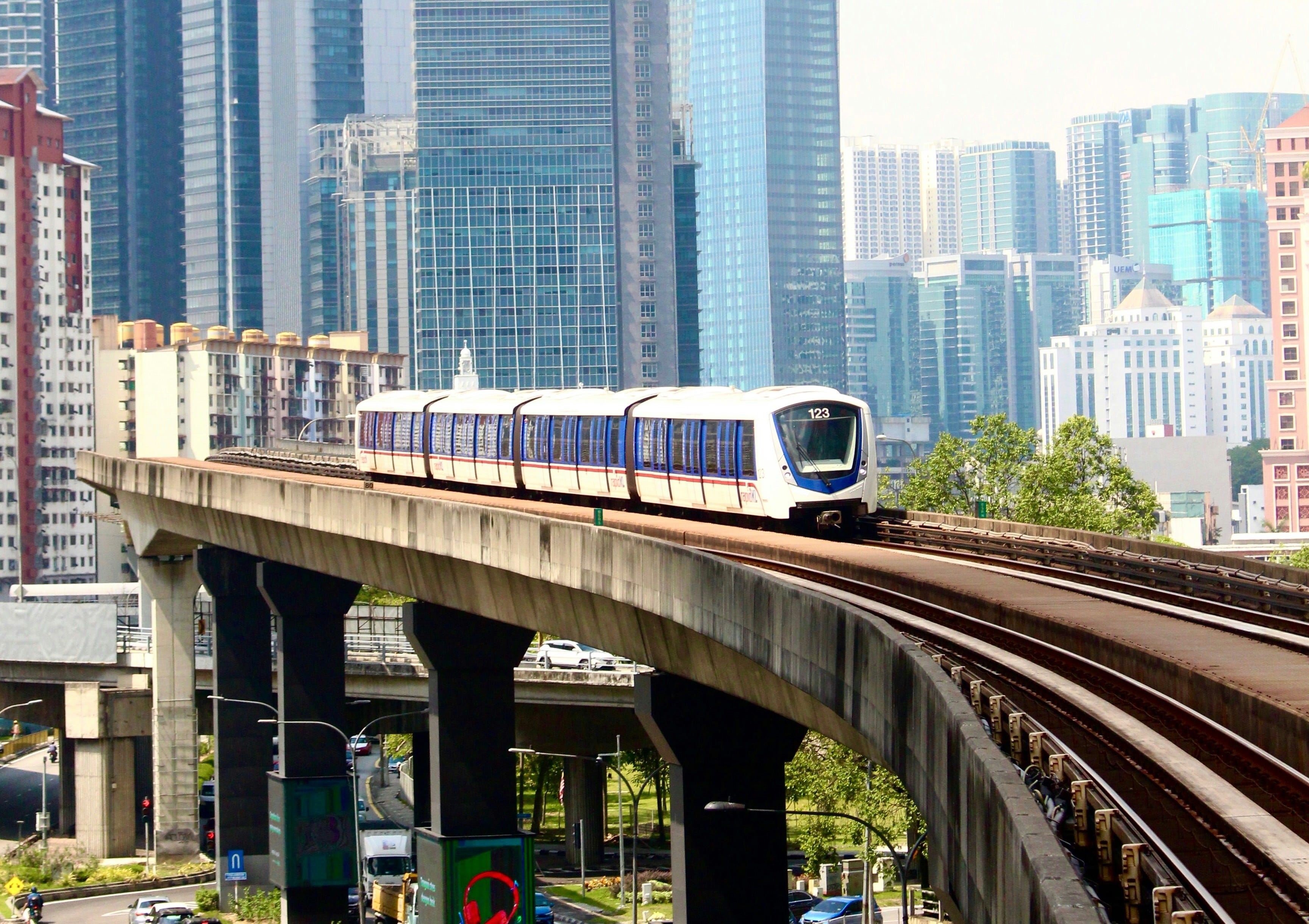
Across Southeast Asia, there is a kind of theft that does not appear in any ledger. It is committed daily, in the currency of hours, and on the very roads meant to bring order.
The mathematical understanding of time is its divisibility into units, such as years, months, days, and so on. Scientifically speaking, time is relative, depending on the speed of the subject or the strength of the gravitational pull it is moving in. But while these are all generally accepted truths, a less-examined reality of time is its dependence on the conditions through which it is lived. And in nations with poor transport infrastructures, the universal twenty-four hours are not felt uniformly.
Improvisation as infrastructure
Southeast Asia is characterized by close proximities, not only on the map but also on the clock, running on time zones that barely differ across borders. It also runs, quite literally, on similar wheels. Across the region, the same categories of informal, small-capacity vehicles operate, only under different names. There are shared minibusses like the Philippines’ jeepney, Timor-Leste’s mikrolet, and Thailand’s songthaew; motorcycle-based carriers like Thailand and Cambodia’s tuk-tuk, Cambodia’s remorque, Indonesia’s bajaj, the Philippines’ tricycle, and Vietnam’s xích lô; and bicycle-powered variants like Indonesia’s *becak* and **Malaysia’s beca, among others. Their similarities stretch even further in their cultural significance, each synonymous with the country that made it.
Though products of different circumstances, these vehicles also find common ground in the conditions they stemmed from: domestic instability caused by post-war destruction, colonial rule, or political upheaval that left formal infrastructure underdeveloped or in ruin. They were improvisations, evidence of each country’s capacity to adapt, and though they have outlasted the circumstances that created them and were not meant to be permanent fixtures, most continue to be in mass usage today.
Nevertheless, the persistence of these vehicles is not, in itself, the problem. They are tangible proofs of each country’s resilience, and have since become fixtures of cultural identity and tourism. Rather, the issue lies in the continued dependence on them to meet transportation demands for Southeast Asia’s rapidly growing urban populations. Instead of meeting those demands through the expansion of formal infrastructure, many cities have instead multiplied the vehicles themselves. And where even these informal carriers fall short, private vehicle ownership fills the gap, a response to the absence of reliable alternatives. Inadequate formal transit pushes commuters toward both small-capacity carriers and personal motorcycles and cars; volume, then, becomes the substitute for infrastructure, and volume, on roads inherited from an era that did not anticipate this scale of population, becomes congestion. While the degree of dependence varies across the region, the nations that do continue to heavily rely on small-capacity carriers and private vehicles, such as Indonesia, Thailand, and the Philippines, rank among the most congested countries globally.
This reliance is less a matter of preference than of absence. Singapore, once dependent on the trishaw during the Japanese occupation, has since built a Mass Rapid Transit system dense enough that many residents live within walking distance of a station, complemented by bus networks that run on fixed schedules. For most of Southeast Asia, meanwhile, this level of efficiency remains out of reach. In many cities, trains and buses cover only so much ground, and everything beyond their reach falls to the informal carriers and the private vehicles that have quietly become the default.
The problem, then, is at a gridlock. The urban road networks across much of the region were largely shaped during an era of significant foreign influence, whether through direct colonial rule or the external political pressures that touched even those nations that retained formal independence, and naturally, the layouts that emerged from that reflected the needs and logics of their time. When that era ended, the physical skeleton of the city remained, but the sustained investment needed to evolve it did not follow. Cities grew around their inherited frameworks rather than beyond them, and those frameworks are now costly and complicated to restructure. Reform is not impossible, but congestion and the political and logistical weight it carries make it perpetually difficult to act on, and this inaction carries consequences that reach beyond inefficiency alone.
Time as a dimension of poverty
Poverty is most often described as a scarcity of resources. A resource far less discussed in that context, however, is time. Unlike food or shelter, problems that money can, at least in principle, solve, time cannot be bought or fully controlled, and in countries where transportation systems are not adeptly built for convenience, it cannot even be reliably managed. And this inefficiency is a paradox: on one hand, it is a symptom of bad governance, a consequence of poor economic handling and misplaced priorities. On the other hand, it is precisely what sustains the stagnancy it exemplifies. The hours spent by workers in transit are time spent not working, resting, or pursuing personal growth, which are all equally prerequisites for productivity.
Yana van der Meulen Rodgers, a labor economist at Rutgers University who has consulted for the World Bank, the United Nations, and the Asian Development Bank, writes that individuals may be “living above the official income-poverty line, but they do not have enough time to fulfill their unpaid work demands” — these are the “hidden poor,” whose deprivation only becomes visible once their time deficits are accounted for. A key determinant of this, she argues, is poor physical infrastructure.
While this dynamic can be observed across Southeast Asia, Metro Manila stands as one of its clearest illustrations. It is where the nation’s economic output is heavily centralized, and as the capital, the government’s ambitions are most visibly on display. Thus, there is the assumption that it would be the Philippines’ most developed city in every measurable sense, infrastructure included. Manila is no exception to that logic, but it does remain an exception to the result. The country’s best attempts at transportation development can be found here, yet they do not quite reflect the image of the robust economy that the Philippines projects on the global stage.
The existing rail network — the LRT-1, LRT-2, and MRT-3 — covers the city’s main arteries, but does not sufficiently absorb the volume of people moving through them daily. Operations cut off at around ten in the evening, which means the bulk of the city’s commuters are funneled into the same morning and afternoon windows. Breakdowns are also frequent, and the number of trains in service has consistently lagged behind ridership. When the rail system cannot be counted on, commuters spill into jeepneys, shuttle services, point-to-point buses, and ride-hailing platforms like Grab and Angkas, all of which compete for the same lanes as private vehicles and feed the traffic all the same. All forms of transit, therefore, exist in a sort of symbiosis, each compensating for the others’ inadequacies, while the commuters bear the cost of losing time.
The arithmetic of an ordinary commute
The lived reality of Manila’s commute cuts across economic lines. The inefficiency of public transit does not simply stay contained within the jeepney or the cars of the LRT or MRT, spilling onto the roads and causing traffic that burdens everyone who uses them, including those with the luxury of a private vehicle.
One such reality is my own. I reside in the heart of Manila, only an eight-minute walk from the nearest train station and three minutes from a jeepney terminal, so in theory, commuting should not pose much of a problem. Moreover, the university I attend is only around two kilometers away. If I take the train, the ride itself is only three to five minutes, but the interval between trains can stretch to ten, and with no fixed schedule, it all becomes a matter of luck. From the station, I would still need to board a tricycle to reach the university, adding another five to ten minutes. So, what should be a ten-minute commute ends up taking thirty.
The calculus worsens with distance. Getting to other, busier districts such as Makati, which is around eight kilometers away, takes roughly an hour: the walk to the station, twenty minutes to Cubao, ten minutes on foot to transfer lines, then another twenty to Ayala. All this, from someone who lives close to the city’s main transport systems. For those who must first take a jeepney or tricycle just to reach a station, or those who forgo the rail entirely, the time lost is worse still.
The collective cost of lost hours
Manila, of course, is only one city. And for all of the Philippines’ shortcomings, it is not the most underdeveloped country in Southeast Asia, yet the time consumed by such a system is already detrimental. So in countries where infrastructure lags further behind, where roads are fewer, and railways are less extensive, the hours lost to transit compound into something far more corrosive than inconvenience.
And the consequences of that are not felt by the individual alone. What is lost in transit is not only personal time, but collective capacity, the culmination of hours that, if redirected, could have compounded into skill, into output, and into the kind of sustained participation in economic life that development actually requires. Poverty, in this sense, feeds itself: the less time people have, the less they can do to escape the conditions that took it from them.
This is not to say that infrastructure reform alone resolves the broader conditions that produce poverty across the region — income inequality, wage stagnation, urban sprawl, and land use policy all determine whether development actually reaches the people it is meant to. But infrastructure remains the precondition that makes the rest of those efforts legible.
This is the contradiction at the heart of Southeast Asia’s “time race,” where nations spend decades positioning themselves as the next frontier of global growth while the very infrastructure meant to support that pursuit continues to erode the hours available for it. Development is not only a matter of output, but a matter of the conditions under which output is produced, and time poverty quietly undermines both. It does not appear in GDP figures, nor does it register as a policy emergency; it accumulates in the body and in the hours, its weight carried by even those least equipped to bear it.
Infrastructure, then, is not something to be sorted out once growth has arrived, but rather what growth arrives on. The road to development is, in a very literal sense, the road itself, and a nation cannot run a time race when its own systems are the ones setting the pace. Until that changes, the cycle does not.
This article reflects reporting and analysis made by The Southeast Asia Pacific Frontier. If you have additional context, a different take, or a perspective we’ve missed — whether you’re a researcher, a policy practitioner, or someone living with these realities on the ground — this is an evolving story and we’d like to hear from you. Drop a comment below or get in touch.
About Author
Jodi Chrystelle Robiños is an Asian Studies student whose interests lie in society, identity, and the forces that shape communities across Asia. Through research and writing, she explores diverse perspectives and seeks to contribute to informed and meaningful discussions on contemporary social issues. She currently serves as the Society and Identity pillar lead for the Southeast Asia Pacific Frontier.
