

Why Singapore held to principle while SEA negotiated for survival in the Strait of Hormuz
As the Strait of Hormuz crisis disrupted global oil flows, ASEAN countries diverged—balancing energy security, freedom of navigation, and economic survival.

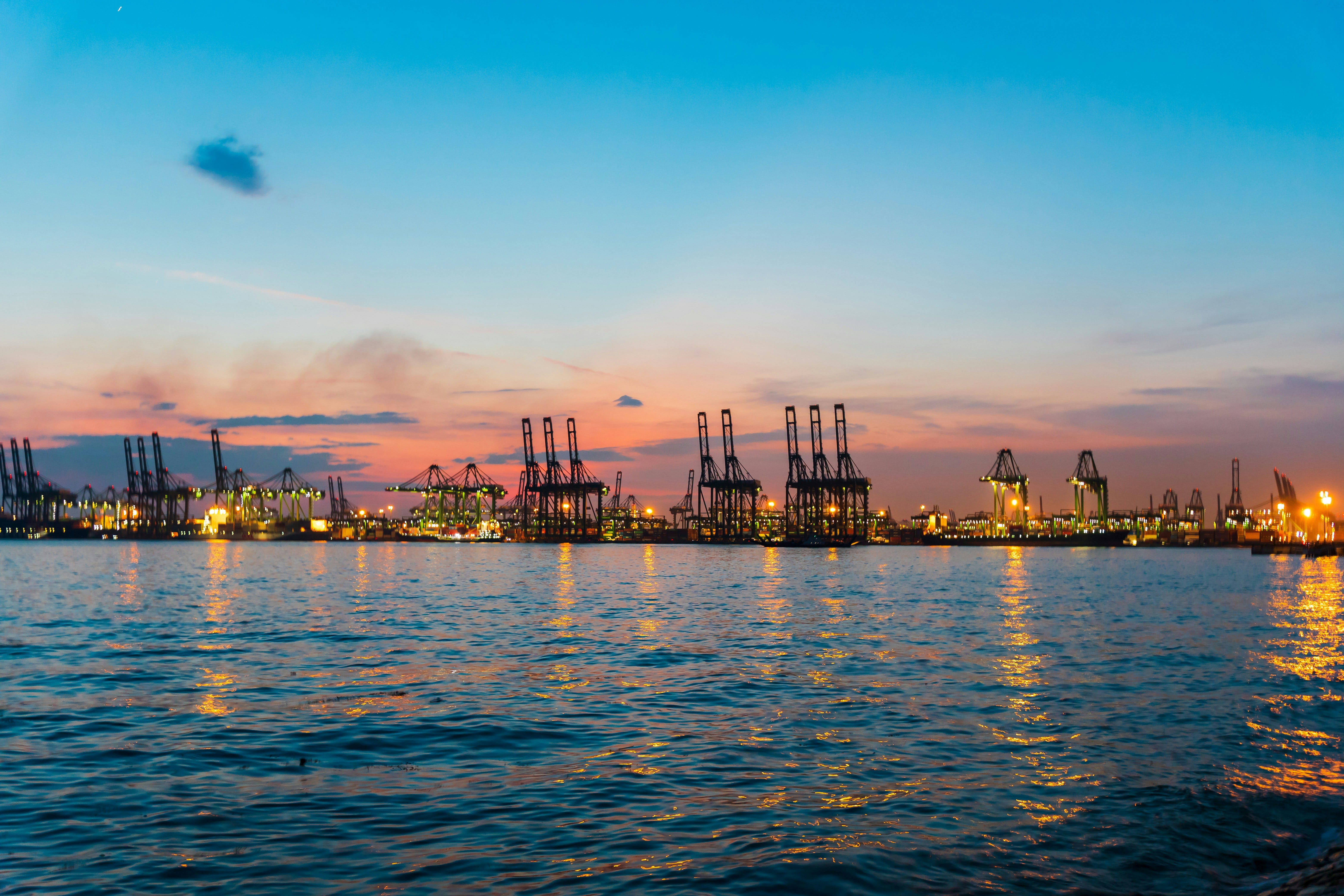
When the Strait of Hormuz effectively closed in late February 2026, four ASEAN members - the Philippines, Malaysia, Thailand, and Indonesia - negotiated with Iran for safe passage of their vessels.
The Philippines was the first among these four, negotiating on the 2nd of April with Tehran to be recognized as a non-hostile country and to ensure the safe passage of Philippine-flagged vessels. Malaysia followed five days later, securing safe passage and reiterating its commitment to freedom of navigation and the safety of maritime passages. Indonesia and Thailand are currently in the midst of their own negotiations with Tehran to secure the safe passage of their ships.
While the region seems to be inching toward dialogue, Singapore refused to do so. Singapore’s Foreign Minister, Vivian Balakrishnan, stated, “As a matter of principle, and not because we’re taking sides, I cannot engage in negotiations for safe passage of ships or negotiate on toll rates.” Malaysian politicians were quick to respond to Singapore’s stance. Nurul Izzah Anwar, Deputy President of Parti Keadilan Rakyat (PKR), asserted that Malaysia would not be lectured on its engagement with Iran, defending the country’s preference for dialogue over disengagement.
This exchange was presented as a principled disagreement. But it revealed that during crises, states prioritize the protection of their economic foundations and subsequently invoke principles to justify their actions. The country able to maintain the strongest principled stance did so because neighboring states absorbed costs it did not incur, costs that ultimately became irrelevant when Washington imposed its own blockade on the strait weeks later.
Three economic structures, three responses
The Philippines had the least room to maneuver in this crisis. Importing 98 % of its crude oil from the Middle East, with confirmed fuel reserves of roughly 51 days at the point of crisis, Manila’s negotiation was less a foreign policy decision than a fiscal emergency. Manila had already declared a State of National Energy Emergency on March 24, making negotiating with Tehran paramount.
Malaysia’s situation was also similar. Despite being an oil-producing country, it still imports 70% of its crude oil to meet domestic demand. However, Kuala Lumpur presented the security of safe passage as the outcome of high-level diplomatic engagement, emphasizing its commitment to freedom of navigation in accordance with international law. The underlying circumstances mirrored those of Manila, but the official narrative differed.
Singapore’s refusal was based on fundamentally different considerations. Unlike its neighbors, Singapore’s economy relies on the uninterrupted movement of ships through the Strait of Malacca rather than on oil imports. The maritime sector contributes approximately 7 % of Singapore’s GDP, and its trade-to-GDP ratio is about 320 %, among the highest globally. When Foreign Minister Vivian Balakrishnan stated in Parliament that transit passage “is a right, not a privilege,” he was correct in legal terms and was also safeguarding a critical national asset. For Singapore, the legal framework supporting freedom of navigation is not abstract; it is essential to the port economy.
Thailand and Indonesia are also in negotiations, making Singapore the sole outlier against a near-unanimous regional response. Every country whose economy depended on energy imports reached the same conclusion, and the one whose economy depended on something else reached a different one.
What was actually being paid
Reports of confirmed toll payments for the Philippines or Malaysia were never substantiated, and Manila’s foreign department explicitly denied that any fees were paid to Iran. However, the absence of a financial transaction does not imply that no cost was incurred. Each country implicitly accepted that passage through the strait required negotiation rather than being exercised as a right under international law. Every government that entered negotiations treated access as conditional, a legal position that Singapore refused to validate.
The objection here, of course, is that negotiating under duress, without formally acknowledging Iran’s legal right to condition passage, doesn’t constitute legal precedent in any strict sense. International law requires both state practice and opinio juris, the belief that the behavior is legally required, before a norm shifts. Countries like the Philippines, which are acting in an emergency, don’t necessarily signal legal acceptance.
But of course, legal norms don’t only erode through formal acknowledgment. They can also erode through accumulated behavior. When enough states treat passage as something to be negotiated rather than exercised as a right, the reality shifts regardless of what anyone formally concedes.
Singapore recognized this cost explicitly. The Philippines and Malaysia were unable to do so, not due to flawed reasoning, but because their circumstances precluded long-term considerations. A government facing only 51 days of fuel reserves lacks the capacity to prioritize the erosion of behavioral norms over immediate supply security. And with the Philippines already became the first country globally to declare a State of Emergency, the calculus is inherently asymmetric: the consequences of fuel shortages are immediate, tangible, and politically severe for these states. In such a context, the cost of contributing to a shift in the treatment of maritime passage under international law becomes secondary and is not reflected in any single national account.
This perspective was available to Balakrishnan, whereas his counterparts in Manila and Kuala Lumpur could not afford such clarity. However, this insight does not equate to moral superiority. The point is not that Singapore acted in bad faith, its position is consistent with decades of historical doctrine, but that consistency is far easier to maintain when the costs are diffuse and borne by others.
Singapore’s position also contains an unacknowledged contingency. Its principled refusal to negotiate with Tehran remained viable because neighboring states adopted pragmatic approaches. Had every ASEAN member maintained the legal position, the regional energy crisis would have intensified, and Singapore’s principle would have entailed significant costs. Singapore benefited from both legal consistency and regional energy stability without incurring the associated costs. Its unblemished stance was, in part, sustained by the compromises of its neighbors.
Then Washington did the same thing
Following the failed negotiations by the United States (US) and Iran in Pakistan, US President Donald Trump announced a naval blockade of the Strait of Hormuz, targeting vessels entering or departing Iranian ports. By April 16, US Central Command confirmed that the blockade was fully implemented and that no vessels had passed in the first 48 hours.
The Philippines maintains that its agreement with Iran remains in effect. Foreign Affairs Secretary Theresa Lazaro publicly confirmed the arrangement, noting that coordination with Iranian authorities continues and that the Iranian ambassador personally contacted her regarding Philippine-flagged vessels scheduled to transit the strait. Manila is thus simultaneously upholding its agreement with Iran while operating under the military protection of the United States, its treaty ally, which is now enforcing a blockade on the same waterway.
Moreover, in the same negotiations, the US and Iran brokered a 10-day ceasefire, with Iran recently announcing that the Strait would be open to commercial vessels for the remainder of the ceasefire.
The blockade rendered the bilateral agreements operationally moot, but the accumulated behavior of states treating passage as conditional rather than inherent will persist beyond this crisis, available as precedent the next time a chokepoint closes (Singapore’s Strait of Malacca, for example). By the time Iran declared the strait open and Washington maintained the blockade, diplomatic assurances secured by the region had become irrelevant in the face of a situation far beyond the influence of any Southeast Asian country.
This was always the deeper truth of the episode: small states do not set the terms of access to global chokepoints. Rather, they negotiate within the margins that great powers leave them - and when those powers act, the margins disappear.
This article reflects reporting and analysis made by The Southeast Asia Pacific Frontier. If you have additional context, a different take, or a perspective we’ve missed — whether you’re a researcher, a policy practitioner, or someone living with these realities on the ground — this is an evolving story and we’d like to hear from you. Drop a comment below or get in touch.
About Matthew Parra
Matthew Parra is a student at the University of Santo Tomas and the founder and Executive Director of The Southeast Asia Pacific Frontier — an independent analytical platform dedicated to rigorous, evidence-grounded analysis of Southeast Asia and the Pacific across economics, society, and geopolitics.
