


In mid-2025, gunfire broke out near the Temple of Ta Muen Thom, a centuries-old Khmer ruin sitting on the contested border between Thailand and Cambodia. Over the following days, clashes spread across twelve border locations.
For a region whose diplomatic identity is built on consensus, restraint, and the careful avoidance of public rupture, it was a striking image. The Association of Southeast Asian Nations (ASEAN) has long prided itself on managing regional tensions through consultation rather than confrontation. Border clashes, despite having historical precedence, between member states were not part of the script.
And yet de-escalation came. Not through ASEAN’s formal mechanisms, but through Malaysia, whose Prime Minister Anwar Ibrahim stepped in to broker talks, with the quiet assistance of the United States and China, even after Thailand’s Foreign Minister had rejected third-party mediation outright.
While most have criticized ASEAN for taking a back seat, a better question is: if the formal institution did not resolve the crisis, what did? And what does that tell us about how regional order in Southeast Asia actually works?
The answer, this article argues, is that ASEAN operates not just through a single channel, but through two distinct souls, one institutional and one political.
The case of two ASEANs
The idea that ASEAN contains more than one logic within itself is not new. Jose Bagulaya, a professor at the University of the Philippines, argues in ASEAN as an International Organization that the organization has always operated with two souls: one legal, one political. The ASEAN Charter formally confers decision-making power to the Summit, but remains silent on what the organization is actually empowered to enforce, effectively placing matters of compliance in the realm of politics rather than law. For Bagulaya, this is not a design flaw. It is a design choice. As he puts it, “ASEAN is a political animal, and the States wearing of the ASEAN mask is just one of the many ways of performing politics.” The result is a permanent tension between acting in accordance with the rule of law and acting in accordance with power politics.
This tension is not merely theoretical. It has a structure. The first soul of ASEAN is institutional. It is structured around the ASEAN Charter, three community pillars (Political and Security, Economic, and Socio-Cultural), and key bodies such as the ASEAN Summit, Coordinating Council, and Secretariat. All of which are consensus-bound, meaning that all member states must agree before mechanisms are adopted and statements are issued. This makes ASEAN deliberately slower to address crises like border clashes than most regional organizations, but for a reason.
According to Bilahari Kausikan, former UN Representative of Singapore, a consensus decision is not a weakness but a preservation mechanism. It ensures that smaller states do not get overwhelmed by the will of bigger states such as Indonesia, and it reassures that the bigger states will not be overwhelmed by a coalition of smaller states. In this line of thinking, consensus is what keeps ASEAN intact.
”Achieving consensus among member states is the central mechanism of ASEAN’s functionality. This consensus is founded upon the idea that the regional interest is interlinked with each member state’s national interest,” Kausikan noted.
The durability of this consensus model was seriously tested in 2012. In July that year, under the Cambodian chairmanship, ASEAN ended a ministerial meeting without issuing a communiqué for the first time in its 45-year history. Following the maritime stand-off in the Scarborough Shoal between China and the Philippines in April 2012, Phnom Penh refused to allow mention of the South China Sea dispute in the joint statement. Vietnam and the Philippines resisted, and the Cambodian Foreign Minister Hor Namhong remained firm, arguing that the foreign ministers’ meeting was not a court and had no business issuing verdicts on bilateral disputes.
“I requested that we issue the joint communique without mention of the South China Sea dispute ... but some member countries repeatedly insisted to put the issue of the Scarborough Shoal… I have told my colleagues that the meeting of the Asean foreign ministers is not a court, a place to give a verdict about the dispute,” Namhong argued.
Yet ASEAN still did not collapse. The deadlock exposed the structural limits of consensus, but it also demonstrated ASEAN’s capacity for internal repair. Then Indonesian Foreign Minister Marty Natalegawa undertook rapid shuttle diplomacy across regional capitals, eventually securing agreement on a six-point consensus on the South China Sea. It was not an ASEAN mechanism that resolved the crisis. It was a member state, moving faster than the institution could, using bilateral initiative to do what collective consensus could not.
It is at this point that the second soul of ASEAN becomes visible. It does not replace the foundational mechanisms of ASEAN, nor does it openly defy it. Rather, it comes in at moments where consensus is slow or has not been reached. Usually, it operates through bilateral initiatives, shuttle diplomacy, and quiet coalition-building. It is political in exactly the way Bagulaya describes: the ASEAN mask is still worn, but the hands moving underneath it belong to individual states.
The political ASEAN in practice
Malaysia’s mediation between Thailand and Cambodia was unexpected, but only if you were watching the institutional ASEAN. Thailand’s Foreign Minister had already rejected third-party mediation outright. Yet Malaysian Prime Minister Anwar Ibrahim moved ahead with the involvement of both the United States and China. As Dr. Ilango Karuppannan, a retired Malaysian Ambassador, observed, Cambodia’s acknowledgment that the meeting was “co-organized by the U.S. with the presence of China” did not diminish Malaysia’s role; if anything, Malaysia’s willingness to host and announce the talks swiftly was what made it possible. Kuala Lumpur did not wait for institutional endorsement.
And this pattern of a Southeast Asian state moving faster than ASEAN’s mechanisms is not entirely new. Indonesia took on a mediating role in the peace process between the Philippines and the Moro National Liberation Front (MNLF) in the 1990s. When an impasse was reached between the Philippines and the MNLF, the Organization of Islamic Cooperation (OIC) expanded its committee and placed Indonesia in charge of mediating talks. This has led to facilitated negotiations that eventually produced the 1996 Final Peace Agreement, which aimed to fully implement the 1976 Tripoli Agreement and established the Autonomous Region in Muslim Mindanao. Moreover, up to the early 2000’s, Indonesia has provided personnel to the OIC for ceasefire monitoring.
More recently, during Indonesia’s 2023 Chairmanship, Jakarta engaged in extensive quiet consultations with multiple stakeholders, including the junta and opposition-linked actors. Rather than publicly confront Naypyidaw, Indonesia pursued what officials described as “silent diplomacy,” attempting to operationalize the Five-Point Consensus through sustained engagement.
Dr. Karuppannan argues that such intervention became necessary precisely because ASEAN’s formal mechanisms were not designed for speed, but for regional unity.
”Its foundational norms of consensus and non-interference, which are critical to regional unity, also inhibit timely responses to intra-regional crises. The Treaty of Amity and Cooperation (TAC) provides for peaceful settlement and even a High Council, but these mechanisms remain inactive,” Dr. Karuppanan noted.
In the Thailand-Cambodia case, the situation was further complicated by the fact that the ASEAN Secretary-General at the time was Cambodian, which made it politically difficult for the Secretariat to assume a visibly mediating role. In such circumstances, bilateral and informal mechanisms became, as Dr. Karuppannan described, the “default approach.”
When the institutional ASEAN stalls, individual member states step into the gap, not to replace the organization, but to do what it cannot do quickly enough. The ASEAN mask, as Bagulaya might put it, is still on. The hands moving underneath it simply depend on the moment.
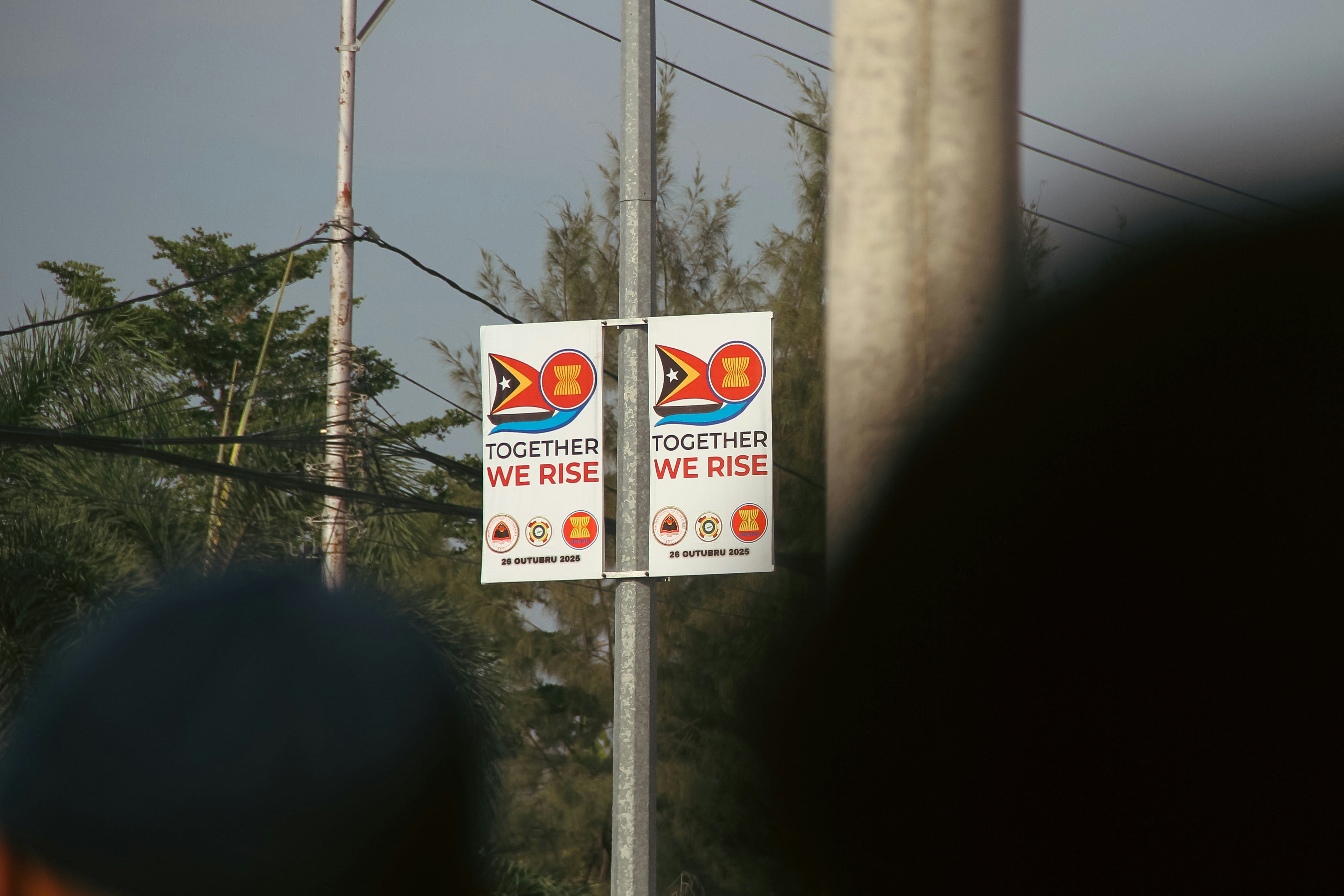
Timor Leste’s new approach
On February 2, 2026, judicial authorities in Timor-Leste opened legal proceedings against the Myanmar junta, including Senior General Min Aung Hlaing, for war crimes and crimes against humanity. The case was initiated after the Chin Human Rights Organization presented a criminal file to a senior Timorese prosecutor in Dili two weeks prior. The file documented specific atrocities allegedly committed against the ethnic Chin minority, including targeted killings, sexual violence, and aerial attacks on civilian infrastructure protected under international law. It was the first time an Association of Southeast Asian nations (ASEAN) member state had initiated such proceedings against a fellow member.
However, the move was not new. In 2023, Timor-Leste engaged with the National Unity Government, Myanmar’s government in exile, which led to the expulsion of their top diplomat in Yangon.
What explains Timor-Leste’s willingness to act where others have not? Deputy Research Director of the Lowy Institute, Susannah Patton, argues that Timor Leste has a distinct international personality from its Southeast Asian counterparts.
”Timor-Leste may be in ASEAN, but its leadership will not quickly assimilate the political culture of the group,” Patton argued.
This does not come as a surprise. According to the ISEAS State of Southeast Asia Survey in 2025, respondents from Timor-Leste placed a higher priority on the Myanmar crisis than any other ASEAN country except Myanmar. Moreover, respondents from Timor-Leste reported being less concerned about the principle of non-interference than those from other ASEAN countries.
The deeper explanation may also be historical. Timor-Leste’s international identity is shaped by its own history of occupation and international advocacy. Its path to sovereignty was secured not through consensus, but through the help of the international community and UN peacekeeping missions. This background may explain why Dili appears more willing to externalize disputes rather than absorb them into ASEAN. The solidarity framing was made explicit by Salai Za Uk, Executive Director of CHRO, who noted that “given Timor Leste’s history, and the indignities the Timorese people suffered in their struggle for independence, there is a real sense of solidarity with the people of Myanmar.” For Dili, the instinct to externalize a crisis rather than absorb it into ASEAN’s diplomatic space is not a departure from its international identity but an expression of it.
This is where Timor-Leste’s move complicates the two-soul framework. The political ASEAN described in the previous section, Malaysia’s mediation and Indonesia’s shuttle diplomacy, works within ASEAN’s diplomatic culture even as it moves faster than its mechanisms. This is because it is centripetal; it pulls crisis response back toward the regional frame, keeps the ASEAN mask on, and resolves tensions without rupturing the organization’s foundations.
Timor-Leste’s legal action is something different. By relocating the contestation from ASEAN’s diplomatic space into the international arena, Dili is stretching the second soul toward something centrifugal. The proceedings do not openly defy ASEAN because Timor-Leste remains a member and has not called for Myanmar’s expulsion. But the logic of juridical escalation such as appointing prosecutors, building criminal files, pursuing accountability through domestic courts, operates on a different axis than consensus and quiet mediation.
Whether this represents a new direction for the political ASEAN, or an outlier shaped by Timor-Leste’s singular history, remains to be seen. But it suggests that the second soul is not monolithic. It too contains multitudes.
Does this strengthen or weaken ASEAN centrality?
At first glance, these episodes appear to strain ASEAN’s foundational norms. But ASEAN has long possessed mechanisms for consultation and dispute management. What these crises reveal instead is a tension between process and urgency.
ASEAN’s formal mechanisms are consensus-bound and intentionally rooted in deliberate diplomacy rather than speed. But crises move faster than consensus. When that happens, Southeast Asian states increasingly supplement institutional procedure with their own initiatives.
The immediate interpretation is that this weakens ASEAN centrality. If mediation is conducted by individual states and if legal proceedings are pursued outside collective endorsement, it’s easy to see how ASEAN can be easily put on the sidelines.
However, this interpretation assumes that centrality requires institutional monopoly. That may no longer be the case.
Even when member states act independently, they rarely depart from ASEAN’s diplomatic culture. Mediation remains consensual, and no state openly calls for expulsion or structural rupture. In this sense, ASEAN may not always execute a crisis response, but it continues to define the boundaries within which crisis response occurs.
Now, Timor-Leste’s legal action tests this logic. By moving the contestation into the international legal arena, Dili stretches ASEAN’s principle of non-interference. Yet it does not abandon the organization; it remains within ASEAN as its newest member while pressing on Myanmar.
The durability of ASEAN centrality, therefore, may not depend on whether ASEAN leads every crisis response. It may depend on whether member states continue to recognize ASEAN as the frame within which the regional order is negotiated.
ASEAN was always a political animal. What these crises reveal is not its weakness, but the full range of its instincts.
This article reflects reporting and analysis made by The Southeast Asia Pacific Frontier. If you have additional context, a different take, or a perspective we’ve missed — whether you’re a researcher, a policy practitioner, or someone living with these realities on the ground — this is an evolving story and we’d like to hear from you. Drop a comment below or get in touch.
About Matthew Parra
Matthew Parra is a student at the University of Santo Tomas and the founder and Executive Director of The Southeast Asia Pacific Frontier — an independent analytical platform dedicated to rigorous, evidence-grounded analysis of Southeast Asia and the Pacific across economics, society, and geopolitics.
